Can You Use Active Ingredients Together?
Yes, active ingredients such as niacinamide, hyaluronic acid and vitamin C can generally be used together. The once-common view that they "cancel each other out" has largely lost its validity in the light of current formulation knowledge; the point that really deserves attention is not whether ingredients clash, but how many strong actives the skin is exposed to at once.
Short answer
- Niacinamide, hyaluronic acid and vitamin C can generally be used together; the "they cancel each other out" myth has largely been left behind by current formulations.
- Hyaluronic acid is compatible with almost every active and can be added as a base layer that helps maintain moisture balance.
- The real risk is not a clash between ingredients but too many strong actives straining the skin at once; always introduce a new active on its own and at a low frequency.
What Is an Active Ingredient, and Why Does It Need Care?
The term "active ingredient" describes components formulated to perform a specific function in skincare products. Niacinamide, hyaluronic acid and vitamin C are among the most commonly encountered examples in this category.
Each active has its own level of stability, its own pH range and its own way of interacting on the skin. Those differences explain why the "together or separately?" question is still around; for most combinations, though, the answer is simple: they can be used together.
Can Niacinamide and Vitamin C Be Used Together?
Yes, they can. According to a view that was widespread years ago, niacinamide and vitamin C could deactivate each other; that, however, was an old assumption based on observations under limited laboratory conditions.
Thanks to current formulation technologies and more stable ingredient combinations, that old risk has largely been left behind. Today the two ingredients can even sit together in the same formula.
Even so, on sensitive skin, applying two strong actives at different times of day (vitamin C in the morning and niacinamide in the evening, for example) is a more cautious approach than using them at high concentrations at the same time.
How Does Hyaluronic Acid Fit With Other Actives?
Hyaluronic acid works by its nature as a moisture magnet (a humectant) and can be used in harmony with most active ingredients.
Applied after ingredients such as niacinamide or vitamin C, it takes on a complementary role that helps maintain the skin's moisture balance. That is why hyaluronic acid is generally seen as a "safe" base layer when you are adding a new active to your routine.
The only exception concerns application technique: because hyaluronic acid is a molecule that can draw in many times its own weight in moisture, it is recommended on cleansed, slightly damp skin rather than on wet skin; otherwise its effect may drop.
Which Combinations Call for More Caution?
As a general rule, adding more than one strong acid or high-dose active to the same routine at once can strain the skin before it has adjusted. On sensitive or reactive skin in particular, a "less but regular" approach gives a far safer result than a "lots and mixed" routine.
The table below summarizes the general compatibility of commonly encountered pairs of actives. This information is a general framework; if there is a special situation with your skin (pregnancy, breastfeeding, dermatological treatment), it is advisable to consult your doctor.
| Combination | Can they be used together? | What to watch for |
|---|---|---|
| Niacinamide + vitamin C | Yes | On sensitive skin, splitting them between morning and evening may be preferable |
| Niacinamide + hyaluronic acid | Yes, no issues | No extra precautions needed |
| Vitamin C + hyaluronic acid | Yes | Applying HA after vitamin C contributes to moisture balance |
| AHA/BHA (glycolic, salicylic acid) + vitamin C | With caution | Do not use them at high doses at the same time; apply them at different times (morning/evening) |
| Retinoid + AHA/BHA | With caution, on a doctor's advice | The risk of irritation is high; consult your doctor before use |
What to Watch for When Using Them Together
The safe way to use active ingredients together rests on a few simple principles:
- Start by adding a new active ingredient to your routine on its own and at a low frequency
- Do not combine strong actives (such as high-concentration vitamin C or AHA/BHA) with too many new products at once
- If the skin shows signs of irritation (redness, stinging, excessive dryness), simplify the combination
- Do not skip sunscreen during the day, especially if you are using actives such as vitamin C or AHA/BHA
- If you are pregnant or breastfeeding, or if you have a skin condition, consult your doctor before adding new actives
How Do You Add Actives to a Routine in Sequence?
When you add actives to a routine, the order generally follows texture: first a water-based step (such as a tonic), then a serum, and last a moisturizer or a mask-type product.
When introducing a new active, starting two or three times a week and watching how your skin responds over two or three weeks is the safest way to avoid sudden irritation.
If more than one active is entering the same routine, applying the less stable one (vitamin C, for example) at the start of the day and the hydration-focused one (hyaluronic acid) towards the end of the steps is a widely accepted order.
A Routine in Harmony With Gentle Formulas
The most sustainable way to benefit from active ingredients is to build a routine with formulas that do not irritate the skin and that keep it balanced. Keeping one hydration-focused layer constant in the routine while you try a new active also makes things easier.
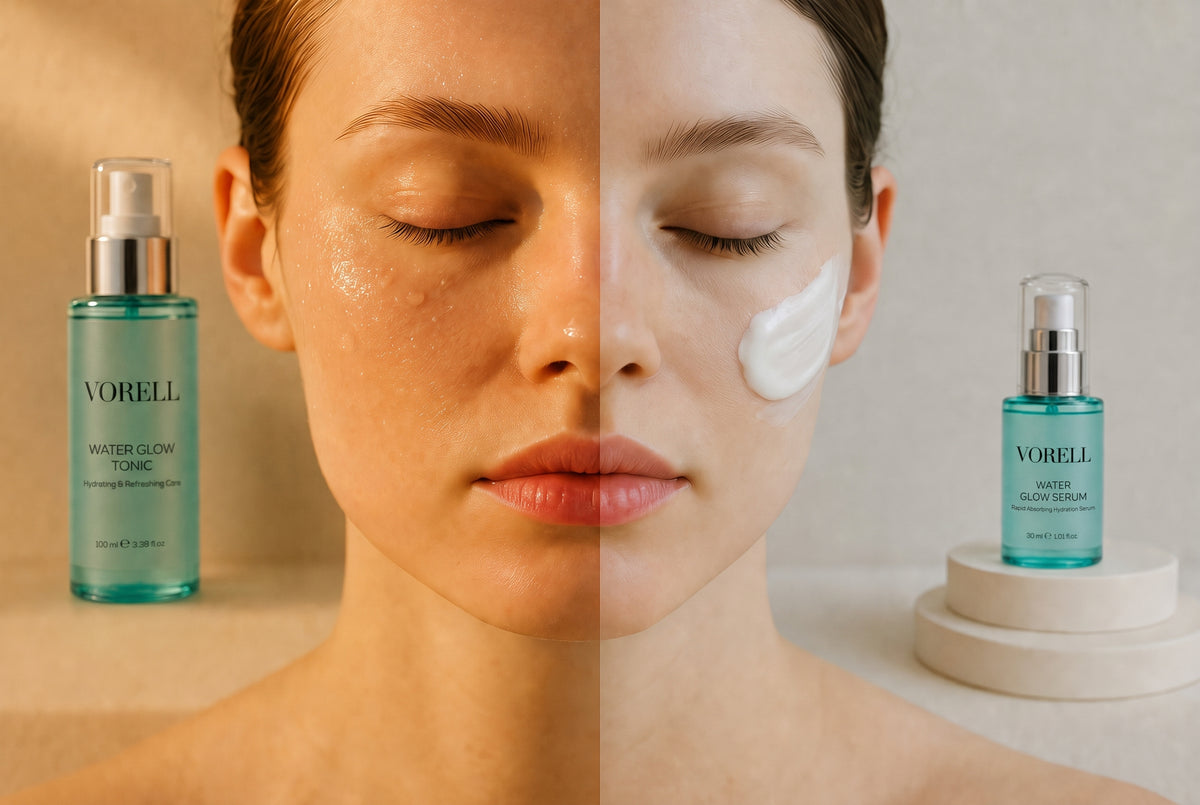
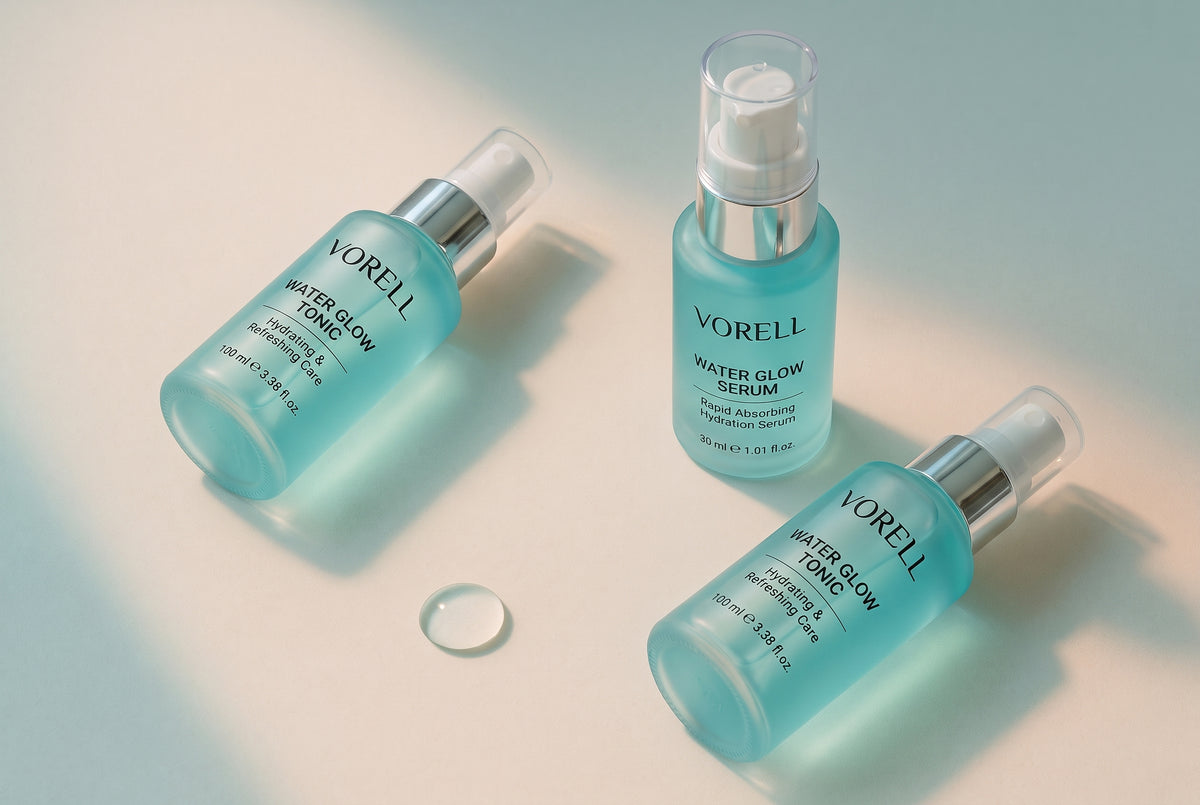
Water Glow Serum takes on exactly that role: it works only with hydration-focused actives such as a hyaluronic acid complex, ectoin, betaine and sodium PCA, creates no clash with strong actives, and helps balance out a feeling of tightness without leaving an oily layer.
For anyone who wants to try niacinamide in a gentler format, Water Glow Bubble Mask is formulated alongside soothing ingredients such as madecassoside, beta-glucan and postbiotic lactobacillus lysate; it is not rinsed off and is used after the cleansing step. Anyone who wants to add an acid-based step can consider Water Glow Tonic; because it contains glycolic and salicylic acid, the cautious combination rules set out in the table above deserve particular attention.
If you would like to look at niacinamide and hyaluronic acid one by one in more depth, take a look at our articles on what niacinamide is and what it does for the skin and everything you need to know about hyaluronic acid. If you are wondering what time of day to use these actives, our article on what a morning and evening skincare routine should look like offers a step-by-step framework.
Frequently Asked Questions
Can niacinamide and hyaluronic acid be used at the same time?
Yes, this pair is generally considered compatible. Niacinamide supports the look of the skin's texture while hyaluronic acid contributes to moisture balance, which is why they can sit together in most routines.
Can I use vitamin C and a retinoid at the same time?
Because this pair together can increase the risk of irritation, using them at different times of day is generally recommended: vitamin C in the morning and the retinoid in the evening, for example. If you have a specific situation such as pregnancy, breastfeeding or sensitive skin, always consult your doctor before using a retinoid.
How should I add a new active ingredient to my routine?
Starting slowly is the safest route. Begin by applying the new ingredient a few times a week, at a low frequency, and increase gradually according to how your skin responds.
What should I do if I get irritation while mixing active ingredients?
Simplify your routine and go back to gentle, basic care steps only. Once the skin has calmed down, it is safer to try the actives again one at a time and at a lower frequency. If the irritation lasts a long time or gets worse, see your dermatologist.
How many times a day should I use active ingredients?
That depends on the type of ingredient and on your skin's tolerance. Hydration-focused actives (such as hyaluronic acid) can be used twice a day, while strong acids or high-dose actives are usually limited to once a day or a few times a week.