How Should Skincare Change in Summer and Winter?
Skincare in summer and winter changes by applying the same basic steps with different textures and at a different frequency: in summer the priority is to keep balance after sweating with light, water-based formulas; in winter the priority is to support the skin barrier and strengthen the hydration layer. The cleansing, toner and serum steps stay the same all year — what changes is the texture, the amount and the frequency of the products.
- In summer, light water-based textures are preferred; in winter, barrier support and richer hydration layers come to the fore.
- The skeleton of the routine (cleanse → toner → serum) stays the same regardless of season; what changes is frequency and amount.
- Sunscreen is needed every day whatever the season, and products should be changed gradually at the turn of a season.
What Changes in the Skin When the Season Changes?
In hot weather, sweating increases, the skin's natural oil production may speed up, and moisture loss becomes more pronounced through perspiration. In cold weather, both the outside air and the dry heated air indoors reduce the skin's capacity to hold water; this can lead to tightness, flaking and a sense of dullness.
The angle of sunlight and the length of exposure also change with the season, so the priority given to protection changes as well. This does not mean, however, that sun protection is unnecessary in the winter months; UV rays continue to reach the skin in cloudy weather too.
Summer and Winter Skincare: A Quick Comparison
The table below summarizes the main differences between the two seasons and the recommended approach.
| Criterion | Summer | Winter |
|---|---|---|
| Priority | Lightness, rebalancing after sweating | Barrier support, reducing moisture loss |
| Preferred texture | Water-based, fast-absorbing | Richer, layered |
| Cleansing step | Gentle, refreshing after sweating | Gentle, non-drying |
| Hydration support | Oil-free serum, a thin layer | Serum + a no-rinse mask that leaves a moisture film |
| Application frequency | Standard, adjusted as needed | Serum can be applied more often, a mask can be added to the routine |
| Sun protection | Every day, high exposure | Every day; the sense of low exposure can be misleading |
What Should Summer Skincare Look Like?
In hot months, skin generally does not take well to heavy, rich creams. Fast-absorbing, lightweight formulas relieve the skin without creating a clogged feeling. An alcohol-free toner refreshes the skin after sweating without weighing it down and prepares the ground for the next layer to absorb; you can find more about the role of a toner in a routine on our blog.
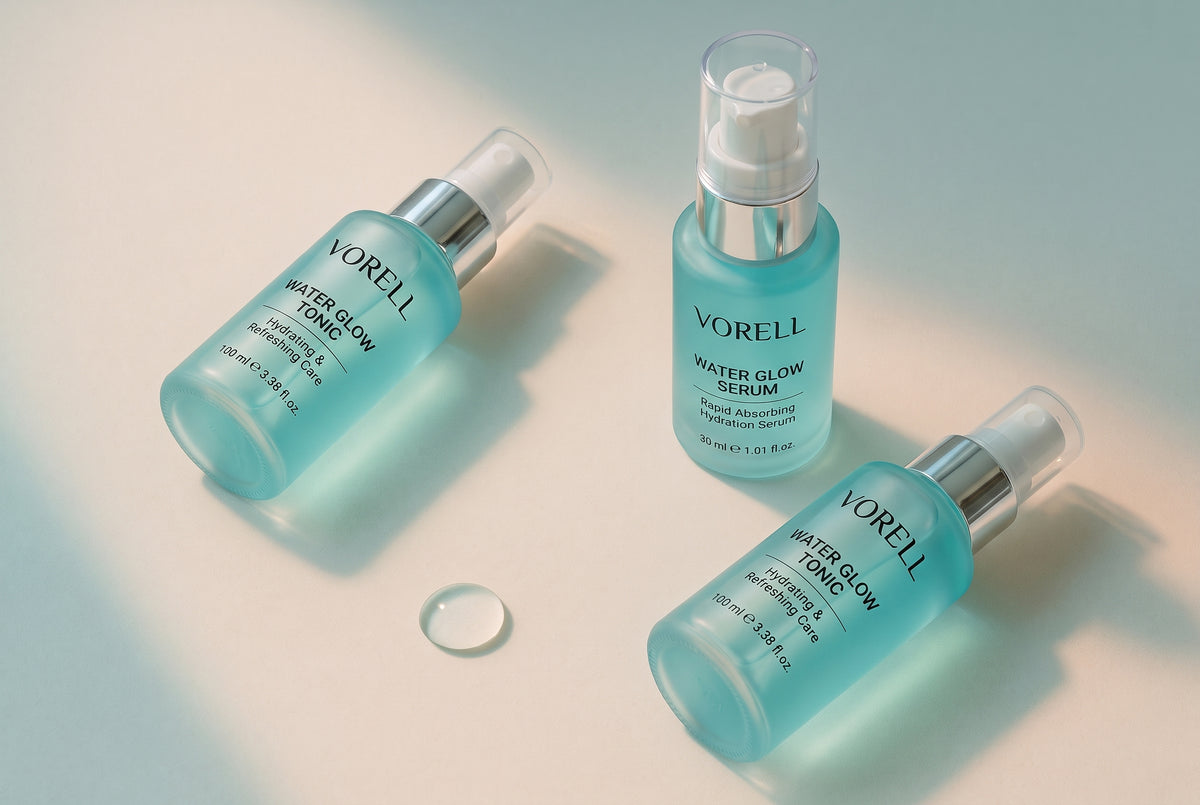
The need for hydration does not disappear in summer, only its form changes. An oil-free, hydration-focused serum may help maintain balance without adding weight to the skin. Water Glow Serum holds water in the skin with a hyaluronic acid complex, ectoin, betaine and sodium PCA, and leaves no oily layer behind; it is an option worth considering in hot months. Two pumps are enough once the skin has dried after the toner.
How Do You Protect the Skin Barrier in Winter?
When cold air and a dry indoor environment come together, the skin barrier becomes more fragile. In this period it is especially important that the cleansing step does not dry out the skin. Alongside its acid duo (glycolic and salicylic acid), Water Glow Tonic carries hyaluronic acid, aloe vera, panthenol, betaine and allantoin, which helps balance the skin without leaving it tight.
Even so, if your skin becomes noticeably more sensitive in winter, reducing the frequency of the acid step is a reasonable choice. If the barrier is already under strain, focusing on repairing the barrier first and returning to active ingredients later is a healthier order.
How Do You Strengthen the Hydration Layer in Winter?
In winter, skin needs more hydration support than it does in summer. Adding a richer product on top of the serum layer, or applying the same serum more often, may help reduce the feeling of tightness.
Closing the routine with Water Glow Bubble Mask also helps: the no-rinse foam, pressed in over thirty seconds, leaves a fine moisture film on the surface with beta-glucan and ectoin, while oat extract and madecassoside help reduce the look of redness. For anyone who prefers to use the toner, serum and mask together, The Glow Ritual 3-Piece Set is a better-value option than buying the three steps separately.
Why Does Body Skin Need Different Care in Winter?
It is not only the face that dries out in winter; a rough appearance can also develop on areas such as the arms, legs and décolleté. These areas generally receive less care than the face, even though friction from clothing and central heating increase moisture loss there as well.
Shine Boost Face & Body Serum can come into play at this point; ceramide NP, squalane and jojoba oil help support the skin barrier and nourish the skin. It is not recommended as a daily serum — one or two pumps on the days the body needs it are enough; and although its main area of use is the body, it can be used on the face as well.
How Do You Adapt the Routine Between Seasons?
When moving a routine from one season to the next, paying attention to a few points helps keep the skin in balance:
- Avoid sudden product changes; make transitions gradually
- Use sunscreen every day, whatever the season
- Add and remove steps by observing what your skin needs at that moment (tightness, shine, dullness)
- Keep the cleansing step gentle in every season; aggressive cleansing weakens the barrier under any conditions
- When adding a new active ingredient, try it on one area first and observe how the skin reacts over a few days
What Makes a Routine Flexible All Year Round?
Rather than rebuilding the routine from scratch at seasonal transitions, keeping the basic steps and adjusting textures and frequency is a more sustainable approach. The trio of toner, serum and mask can be used in the same order all year; what changes is only the amount of serum, the frequency of the mask and the time given to body care.
If you are not sure what your skin needs right now, the free AURA skin analysis lets you see your radiance score and seven metrics and shape your routine accordingly. The photos are not stored and the tool is not a medical diagnostic method; if the condition of your skin worries you, consulting a dermatologist is recommended.
Frequently asked questions
Should I stop moisturizing altogether in summer?
No. Skin loses moisture even in hot weather; it is enough simply to switch to a lighter, water-based texture. Stopping moisturizing altogether can upset the skin's balance in the long run.
Why does skin turn dull faster in winter?
Cold air and a dry indoor environment speed up the skin's moisture loss. When moisture levels drop, the skin's surface reflects light less evenly, which leads to a dull appearance.
When should I change my routine between seasons?
Rather than a fixed date, it is better to listen to your skin. When you see signs such as tightness, flaking or excessive shine, you can start adjusting your routine gradually.
Can I keep using an acid toner in winter?
Generally yes, but if your skin becomes noticeably more sensitive in winter, reducing how often you use it is a reasonable choice. If the skin shows signs of tightness or irritation, it is safer to focus on supporting the barrier first and return to active ingredients gradually.
Is barrier support needed in summer too?
Yes, but in a different form. In summer, barrier problems generally come from sweating, chlorine or sun exposure; instead of a rich layer as in winter, a light, humectant serum is often enough.
Should I use the same product for my body and my face?
Not necessarily. Face serums are generally formulated to be lighter, while richer textures may be preferred on the body. Products such as Shine Boost Face & Body Serum can be used in both areas, but they are primarily designed for the body.