
Hyaluronic Acid: Everything You Need to Know
Short answer:
- Hyaluronic acid is a natural moisture molecule (a humectant) that can hold many times its own weight in water; it binds water to the skin, not oil.
- It is considered suitable for almost every skin type and age group; depending on its molecular weight it works on the skin surface or in deeper layers.
- For the best result it should not be used on its own, but followed by a moisturizer and applied the way the formula itself instructs (on damp or on dry skin).
Hyaluronic acid is a sugar molecule that occurs naturally in the skin and can hold many times its own weight in water; as a humectant it draws water from the surroundings and from beneath the skin up to the surface and holds it there, helping to support a plump, water-filled look. It adds no oil or nutrients and does not replace a cream — it is a separate layer that supports the moisture balance.
What Is Hyaluronic Acid?
Hyaluronic acid is produced naturally in the body; it is especially concentrated in the skin, the joints and the fluid inside the eye. Its importance in skin science comes from its water-holding capacity: under the right conditions it can bind many times its own weight in water, which is why it is described as a kind of "moisture magnet."
As we age, the amount of hyaluronic acid the body produces declines; this is one of the factors that contributes to skin looking less plump over time. Hyaluronic acid added to skincare products steps in at exactly this point and helps the skin get moisture support from the outside. Most of the hyaluronic acid used today is produced through fermentation, which makes it possible to use in plant- and microbe-derived formulas that contain no animal ingredients.
How Does Hyaluronic Acid Work in the Skin?
Hyaluronic acid is classified as a humectant: instead of adding oil to the skin, it draws water from the surroundings and from beneath the skin up to the surface and keeps it there. Its effect varies with molecular weight — the table below summarizes the difference.
| Molecular weight | Where it works | Perceived effect |
|---|---|---|
| Low molecular weight | Deeper layers of the skin | More sustained moisture support from within |
| High molecular weight | The skin surface | An immediate feeling of plumpness and radiance |
| Multi-weight complex | Surface and deeper layers together | Both an immediate and an ongoing feeling of hydration |
Good formulas usually combine more than one molecular weight to target both a surface-level and a deeper hydration effect.
A Short History
Hyaluronic acid was first identified in the fluid of the eye in the 1930s, and over the following decades it spread first through medicine and then through cosmetics. Decades of use make it one of the best-researched molecules in skincare.
Which Age Group Is It Suitable For?
The most practical thing about hyaluronic acid is that it suits almost every age group and skin type:
| Age range | The role of hyaluronic acid |
|---|---|
| Twenties | A forward-looking routine step aimed at maintaining the moisture balance |
| Ages 30–40 | Supporting a declining natural moisture capacity, a plumper look |
| Mature skin (40+) | Helps soften the appearance of lost elasticity, usually in richer formulas |
It is also considered safe for sensitive skin, because hyaluronic acid is a molecule that occurs naturally in the body and is generally well tolerated. During pregnancy or breastfeeding, we recommend consulting your doctor before starting any active ingredient.
How Is It Used With Other Active Ingredients?
Hyaluronic acid works well with almost every active ingredient and is usually an easy layer to add to a routine:
| Active ingredient | Note on using them together |
|---|---|
| Vitamin C | Can complement the brightening effect with moisture support |
| Retinol | May help balance the temporary feeling of dryness retinol can cause |
| Niacinamide | Forms a balanced pair that supports both hydration and the look of skin tone |
What Should Be Avoided?
Using a serum containing hyaluronic acid in a very dry or windy environment without a moisturizer sealing it in can lead the molecule to draw moisture from the skin's own deeper layers to the surface, because it cannot find enough moisture in the air. That is why we recommend always applying a moisturizer with a suitable moisture level after the serum.
Another common mistake is layering more than one hyaluronic acid product in the same routine. Rather than adding any benefit, this can create unnecessary product density; a single good serum, applied correctly, is usually enough to cover the daily need for hydration.
How Does Hyaluronic Acid Differ From Glycerin and Ceramides?
Alongside hyaluronic acid, other moisture-focused ingredients such as glycerin and ceramides also show up frequently on the shelf; but the three take on different jobs.
| Ingredient | Its job |
|---|---|
| Hyaluronic acid | Humectant — draws water into the skin, with a high water-holding capacity |
| Glycerin | Humectant — draws water into the skin, but without the high capacity of hyaluronic acid |
| Ceramide | Barrier support — does not draw moisture in, but helps keep existing moisture from escaping |
The most balanced result usually comes from using these ingredients together so they complement one another: hyaluronic acid draws in moisture, and a moisturizer keeps that moisture at the skin's surface. One resource that rounds out this step: our article on the 10 biggest mistakes people make when choosing a moisturizer.
How Do You Apply Hyaluronic Acid Correctly?
How you apply it determines the result as much as the formula itself does. The classic advice is to apply the serum to slightly damp skin, so the molecule draws in the surrounding water more effectively. But this depends on how much water-binding load the formula already carries on its own: rich formulas that also contain humectants such as ectoin, betaine and sodium PCA do not need damp skin, and can even be diluted on wet skin and lose their effect.
That is why taking the product's own directions as your guide is the safest route. Applying the moisturizer without waiting more than a few minutes after the serum helps keep moisture at the skin's surface in every case. For more on the order of a routine and how serums work in general, see our article on what a serum is and how to use it.
VORELL Water Glow Serum and the Water Lock Approach
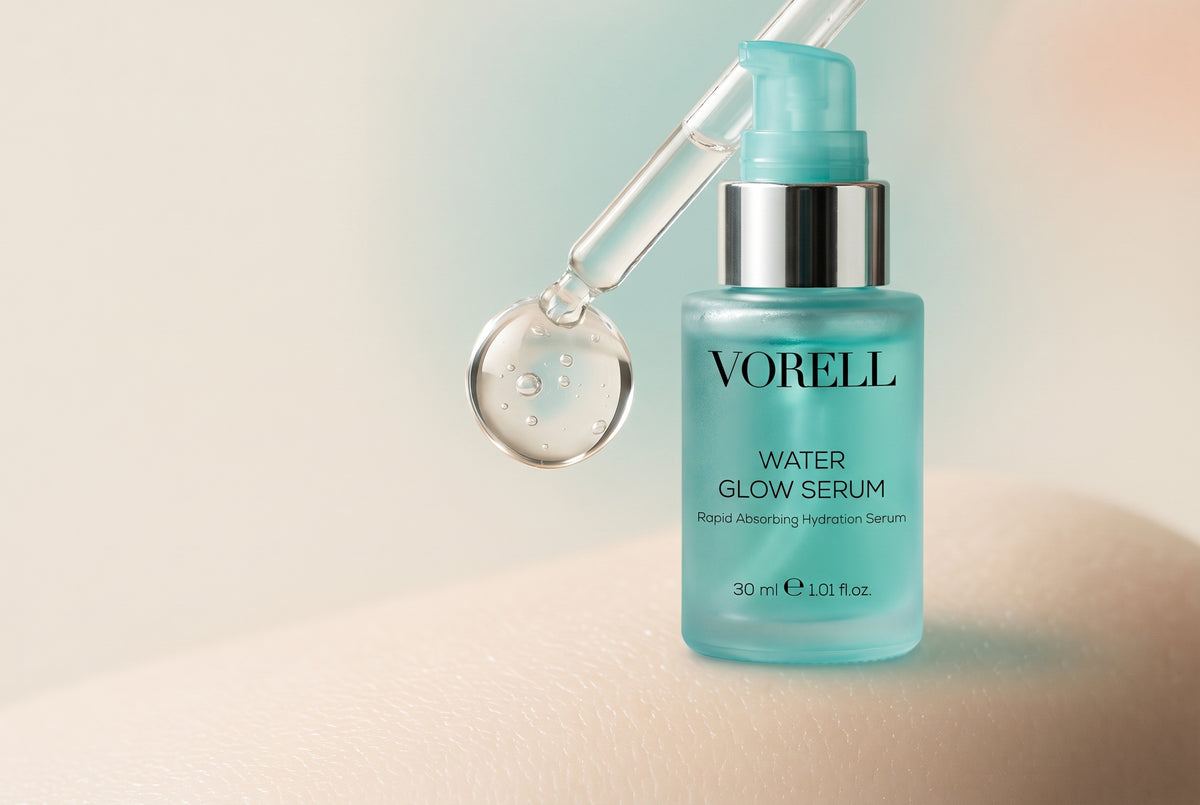
VORELL's Glow series is shaped by exactly this moisture-focused logic: supporting skin in reaching a glass-like "water glow" that comes from within. Water Glow Serum (30 ml) applies the molecular weight logic described above directly — a hyaluronic acid complex with different molecular weights supports holding moisture both at the surface and in the layers underneath. Alongside it come ectoin, betaine and sodium PCA; these bind water to the skin and create what we call the "water lock" effect. Panthenol, aloe vera and allantoin help ease the feeling of tightness.
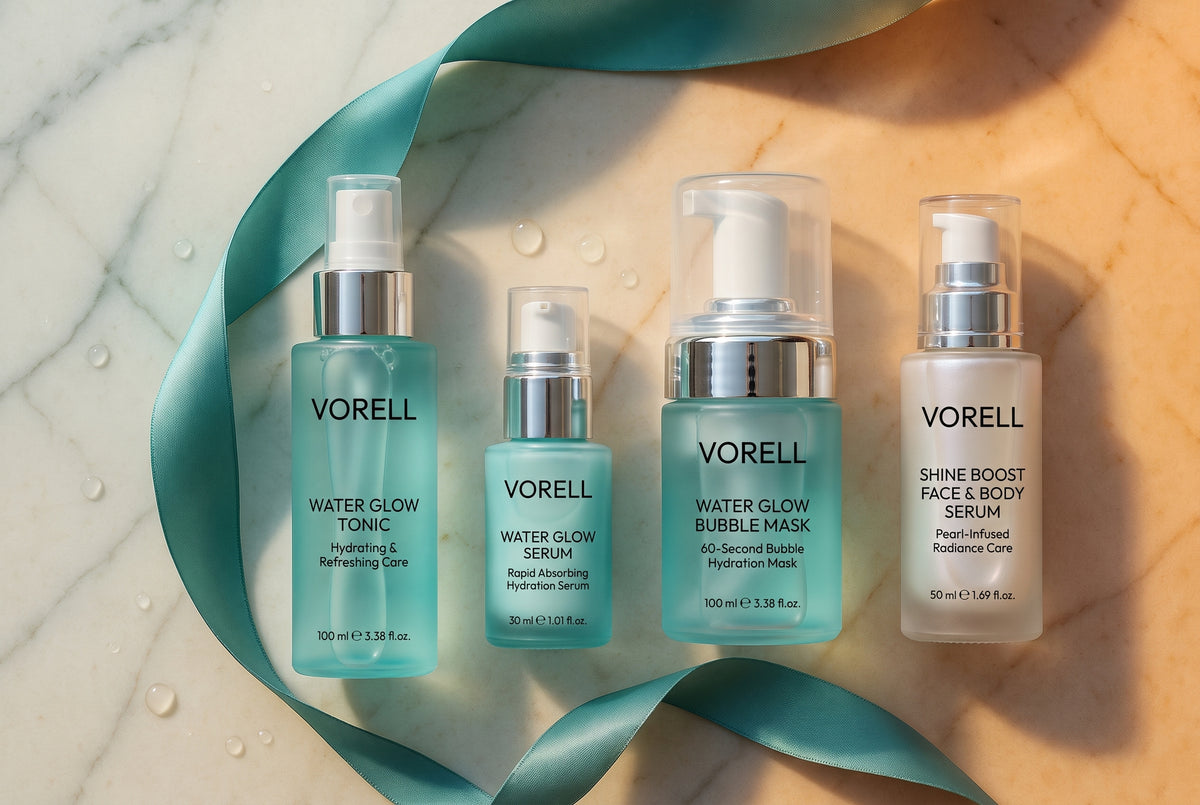
Its consistency is not watery but a little fuller, a texture that does not run. It absorbs quickly and leaves no oily layer behind. An important application note: apply Water Glow Serum to dry skin, not damp skin; on wet skin its effect is reduced. Water Glow Tonic is applied with a cotton pad; once the skin is dry, two pumps of Water Glow Serum are enough. For more on where a toner belongs in a routine, take a look at our article on whether a face toner is really necessary.
If you would like to try the toner, the serum and the no-rinse Water Glow Bubble Mask together, you can look at The Glow Ritual 3-Piece Set; bought separately the three products come to 2,809 TL, while the set price is 2,199 TL. With a few weeks of regular use you can observe the change in your skin's water balance yourself, and if you like, you can track your glow score and 7 metrics over time with AURA's free AI-powered skin analysis — two photos are enough, the photos are not stored, and the tool is not intended for medical diagnosis.
Frequently asked questions
Is hyaluronic acid suitable for every skin type?
Yes, hyaluronic acid is considered compatible with almost every skin type, including oily, dry, combination and sensitive skin, because it helps support the moisture balance without adding oil.
Should hyaluronic acid be used in the morning or in the evening?
It can be used at either time. What matters is applying a moisturizer over it to preserve the moisture level.
Is hyaluronic acid enough on its own?
Although hyaluronic acid is a strong moisture supporter, for a balanced look we generally recommend using it as part of a complete routine, together with a toner and a moisturizer.
Is a serum containing hyaluronic acid the same thing as a hyaluronic acid filler?
No. The hyaluronic acid in skincare products is a cosmetic ingredient that helps support the moisture balance at the skin's surface; a filler is a medical procedure in which a doctor injects it beneath the skin. The two serve different purposes and are not interchangeable.
Can hyaluronic acid dry the skin out?
Used correctly it does not dry the skin; but in a very dry or windy environment, if it is used without a moisturizer applied over it, the molecule can draw moisture from the skin's own deeper layers up to the surface. That is why applying a moisturizer after the serum matters.
Should I use Water Glow Serum before or after the toner?
It should be used after. The serum is applied once the skin is dry, following cleansing and Water Glow Tonic; as one of the final steps of the routine, the serum comes right before the moisturizer.
%20that%20can%20hold%20many%20times%20its%20own%20weight%20in%20water;%20it%20binds%20water%20to%20the%20skin,%20not%20oil.%0AIt%20is%20considered%20suitable%20for%20alm...)