How to Get Glass Skin: A Step-by-Step Routine
Short answer
- Glass skin is a smooth, moisture-plumped look in which the skin reflects light evenly; it comes not from makeup but from a healthy skin barrier and consistent hydration support.
- The road map has three steps: a gentle, alcohol-free tonic, then a moisture-binding serum, then a moisture-film mask a few times a week; the order and the consistency matter more than any single "miracle product."
- Results are not instant; with regular use, a gradual improvement in skin texture and radiance is seen over a matter of weeks.
Glass skin is a water-filled, healthy-looking state created when the surface of the skin reflects light evenly and smoothly; it comes not from a single product but from a strong skin barrier and consistent hydration support. Getting there is a matter of gentle cleansing, a moisture-binding serum, and keeping both of those up consistently — there is no shortcut and no miracle step.
What Exactly Is Glass Skin?
Glass skin is a term born out of Korean skincare culture, describing skin that looks "like glass": translucent and smooth. Pores appear tightened, tone appears even, texture appears softened; when light hits the skin it reflects back evenly rather than scattering.
This is not a makeup effect. The look comes from the cumulative effect on the skin of a layered, consistent routine that runs from cleansing through to moisturizing. Korean skincare has summed up that approach for years with the principle "barrier first, glow second."
What Is Behind the Look? Hydration and the Skin Barrier
The outermost layer of the skin, the stratum corneum, is a barrier that both holds moisture in and acts as a shield against external factors. When this barrier is healthy the skin looks more resilient and plumper and reflects light evenly; it does not turn flat and dull. When the barrier weakens, moisture loss speeds up and the skin starts to look tight and uneven.
The Basic Principles of Keeping the Barrier Strong
- Cleansing with gentle, alcohol-free formulas that do not irritate the skin
- Supporting moisture levels throughout the day rather than focusing only on controlling oil
- Keeping a consistent routine instead of aggressive exfoliation or frequent product switching
- Never skipping sun protection
If you have persistent redness, itching or visible irritation on your skin, it is advisable to consult a dermatologist before starting a routine; signs like these should be addressed by a doctor's assessment rather than with skincare products.
The 3 Steps to Glass Skin
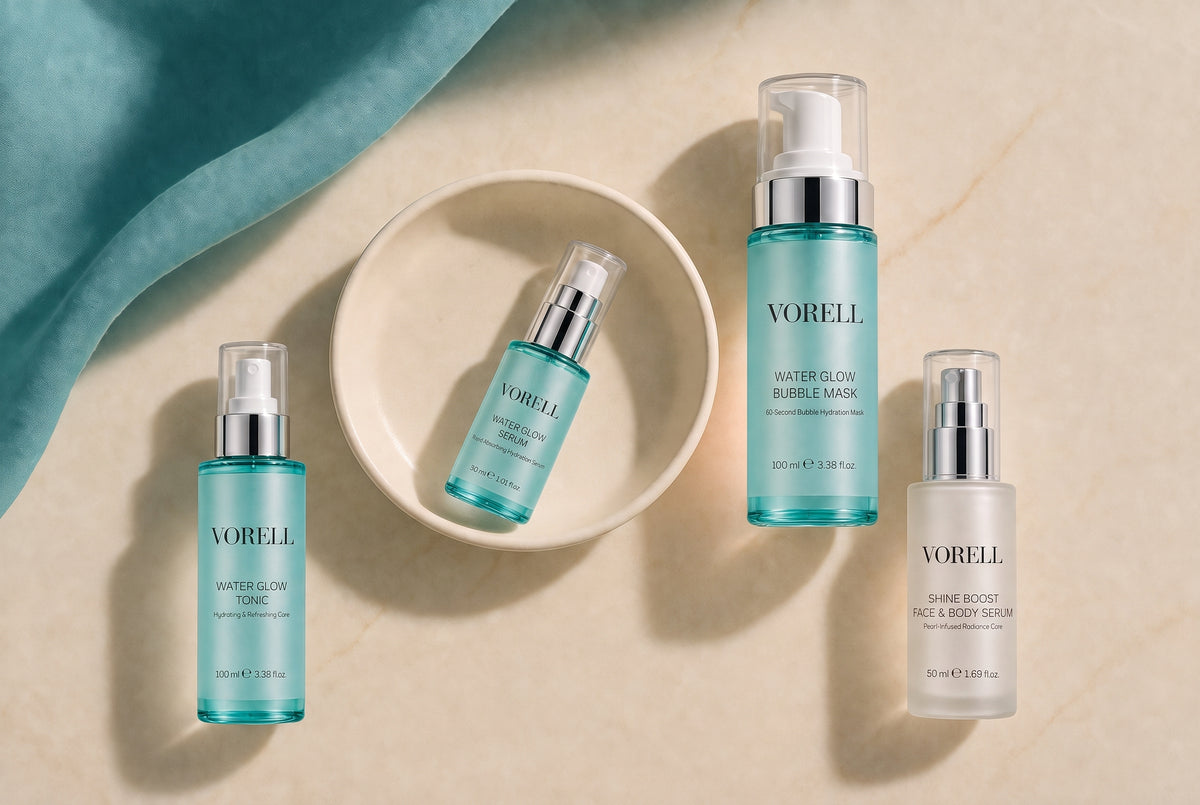
The glass skin look is built from three layers that complete one another: a no-rinse tonic, a moisture-binding serum, and a weekly moisture film. The table below summarizes these three steps and what each contributes to the skin.
| Step | Product | Key Ingredients | Contribution to the Skin |
|---|---|---|---|
| 1. Tonic | Water Glow Tonic | Glycolic acid, salicylic acid, hyaluronic acid, aloe vera, panthenol, betaine | Smooths the surface, helps clarify the look of pores, preps the skin without drying it |
| 2. Serum | Water Glow Serum | Hyaluronic acid complex, ectoin, betaine, sodium PCA, panthenol | Holds moisture in the skin, gives a plump, "dewy glow" feel |
| 3. Moisture film (weekly) | Water Glow Bubble Mask | Oat extract, lactobacillus lysate, madecassoside, beta-glucan, ectoin, niacinamide | Leaves a thin moisture film, deepens barrier support |
1. Tonic After Gentle, Balancing Cleansing
The first step to glass skin is clarifying the skin without drying it out. A facial tonic helps take away the residue left on the surface after cleansing and helps the next step absorb more easily. Water Glow Tonic is spritzed onto a cotton pad two or three times and applied gently to the skin; no rinsing is needed. The product is not a cleanser, it is used after the cleansing step, and it is not recommended on open wounds.
2. The Moisture-Binding Serum Layer
The serum layer is the most decisive step for the glass look, because plump, hydrated skin is the precondition for a surface that reflects light evenly. Water Glow Serum is used with two pumps after the tonic has been applied and the skin has dried; on wet skin its effect drops. It leaves no oily layer, just a velvety softness behind.
3. The Weekly Moisture Film: Bubble Mask
Anyone who wants to take the look a step further can add Water Glow Bubble Mask to their routine. The no-rinse foam, worked in over thirty seconds, leaves a thin moisture film on the surface with beta-glucan and ectoin; it contains no granules and makeup can be applied over it. This is not a cleanser but a hydration support step.
A Glass Skin Approach for Your Skin Type
The glass skin goal holds for every skin type, but the weight of the layers can be adjusted to suit yours.
| Skin Type | Main Need | Routine Note |
|---|---|---|
| Dry skin | Slowing moisture loss | The serum layer should not be skipped; a moisturizer can be added on top if needed |
| Oily skin | Alcohol-free formulas that do not feel heavy | An oily look should not be confused with radiance; choose lightweight textures |
| Combination skin | Balancing by area | A thin layer can be applied on the T-zone and a fuller one on the cheeks |
| Sensitive skin | Avoiding irritation | Start with alcohol-free, gentle formulas and patch-test any new product on a small area first |
As with products that contain acids, it is advisable to consult your doctor before trying a new active ingredient during pregnancy or breastfeeding.
The Glow Ritual: Three Steps Under One Routine
VORELL's Glow range was designed around exactly this need: a "water glow" effect that comes from within, with alcohol-free formulas suitable for sensitive skin. The The Glow Ritual set brings the tonic, serum and bubble mask together for 2,199 TL; bought separately the three products come to 2,809 TL, so the set saves you 610 TL. Shine Boost Face & Body Serum is not included in this set; it is a separate product intended for special occasions and body use.
How Do You Measure Your Progress?
Comparing before you start a routine and again a few weeks in makes the change concrete. AURA is an AI-powered skin analysis tool that gives you a free glow score and seven metrics from two photos; the photos are not stored. AURA is not a medical diagnostic tool, it only provides a reference point for tracking changes in the look of your skin.
How Long Does It Take to See Results?
We are talking about a result that emerges not from a single application but from regular care that builds up over weeks. The skin responds to consistent hydration support over time; that is why sticking with a few products your skin gets along with, rather than changing your routine often, is the most reliable route to a result.
Impatience is the most common mistake, since it leads to routine changes and therefore to the skin having to adapt all over again. The points below summarize the other slip-ups people often run into along the way.
Common Mistakes on the Way to Glass Skin
- Applying the serum to wet skin: its effect drops, and you need to wait for the skin to dry first.
- Focusing only on oil control and neglecting hydration support: the barrier weakens and you get more flatness instead of glow.
- Trying too many active ingredients at once: the risk of irritation rises before the skin can adapt.
- Skipping sun protection: barrier repair is slower without it.
Frequently Asked Questions
Does the glass skin look turn out the same way for everyone?
No. Skin type, natural tone and texture differ from person to person; glass skin is therefore not "one look" but the healthiest, most hydrated version of your own skin. The goal is not to make your skin look like someone else's, but to bring out its own natural radiance.
How long should I wait to see results?
Moisture balance and barrier support are a process that develops over time. With regular use, a noticeable softening in the skin's texture and radiance is usually seen over a matter of weeks; sticking with the routine matters for a lasting result.
Is it suitable for oily skin too?
Yes. Glass skin should not be confused with looking oily; the goal is healthy, balanced skin rather than shiny skin. Lightweight, alcohol-free formulas can help support this look on oily skin too, without upsetting its moisture balance.
Should I use the tonic, serum and mask all at the same time?
No, each serves a different purpose and they are applied in sequence: tonic first, then serum once the skin has dried. The bubble mask can be added a few times a week as a separate care session on top of those two steps.
Which skin types can start a glass skin routine?
The routine can be adapted to almost every skin type, including dry, oily, combination and sensitive; the difference lies in how much you apply and how often. On sensitive skin, patch-testing a new product on a small area first is always safer.
Should I use more product to get results faster?
No. More product does not mean faster results; if anything it can tire the skin and put the barrier under strain. Regular use at the recommended amounts (two pumps of serum, for example) gives a more reliable result than over-application.