Can You Use AHA and BHA Together? A Safe-Use Guide
Yes, AHA and BHA can be used together in the same skincare routine — for most skin types it is safe. What raises the risk is not combining the two, but introducing both at high concentrations, frequently and abruptly. The key to safe use is starting at a low frequency, increasing the concentration gradually while watching how your skin responds, and applying sun protection throughout the day.
- AHA (e.g., glycolic acid) is water-soluble and works on the skin's surface; BHA (e.g., salicylic acid) is oil-soluble and can reach inside the pore — which is why the two complement each other.
- Using them together is possible; on sensitive skin it is advisable to start with 1-2 uses per week and to raise the frequency as tolerance builds.
- If you have active irritation, an open wound or sunburn, or you are pregnant or breastfeeding, you should consult your doctor before using acids.
- Sun protection during the day is essential in any routine containing AHA/BHA; acids can make skin more sensitive to the sun.
What are AHA and BHA, and what do they do?
AHA (alpha hydroxy acid) is a family of water-soluble acids obtained from sources such as sugar cane, with glycolic acid as its best-known member. It helps dead cells that have built up on the skin's surface come away more easily and contributes to a livelier, smoother-looking complexion.
When BHA (beta hydroxy acid) is mentioned, the first thing that comes to mind is salicylic acid. Thanks to its oil-soluble structure, it does not stay only on the surface but can travel into the pore. This property sets it apart in terms of its potential to help clarify the look of oil and debris built up inside the pore.
Both are considered under the heading of "exfoliation," but their mechanisms and areas of action differ — used correctly, they should be thought of as two distinct effects that complement each other rather than duplicate each other's work.
Why they work differently: on the surface or inside the pore?
The source of this distinction is solubility. AHA is hydrophilic, meaning it mixes well with water; it stays on the skin's surface and acts there. Some AHA types are also thought to have a mild moisture-binding effect, but AHA is primarily an exfoliating active, not a moisturizer. Because glycolic acid is the smallest molecule in the AHA family, it penetrates the skin relatively easily, yet its action is still essentially superficial.
BHA, on the other hand, is lipophilic, meaning it is oil-soluble. Because it can mix with the skin's own oil (sebum), it can travel into the pore, to a depth AHA cannot reach. This is why BHA is preferred especially on skin prone to oiliness and in areas where the look of pores is a concern, while AHA is generally used with dullness and smoothness in mind.
In practice this means the two acids work at different layers of the skin and, used at the right dose, can complement each other rather than duplicate each other's work.
| Feature | AHA (e.g., glycolic acid) | BHA (e.g., salicylic acid) |
|---|---|---|
| Solubility | Water-soluble (hydrophilic) | Oil-soluble (lipophilic) |
| Area of action | Skin surface | Surface + inside the pore |
| Need it is best known for | Dullness, look of smoothness | Look of pores, tendency toward oiliness |
| Moisture-binding property | Mild (varies by type) | Limited |
| Typically suitable skin types | Normal, dry, combination | Oily, combination, visible pores |
| Caution on sensitive skin | Moderate | Moderate to high |
Is it safe to use them together, and under what conditions?
For most skin, yes, it is safe — but not "at the same time, every day, at the highest concentration." Safe pairing is usually achieved in one of three ways: alternating from day to day (AHA one day, BHA the next), bringing both into the same routine after building tolerance to each separately, or using a single product that already formulates the two together at a balanced concentration.
That last option is generally more predictable than layering two separate high-concentration products on your own at home, because the concentration and pH balance have already been set at the formulation stage. Even so, every skin responds differently. If you see redness, a stinging sensation, or excessive flaking, reducing the frequency or taking a break is the right step.
The question of concentration and pH: why does it matter?
For AHA and BHA to be effective, the product's pH has to sit within a certain range, that is, it has to be low (acidic). This low pH is what allows the acid to work, but it can also leave the skin more sensitive than usual. Cosmetic products intended for daily home use are generally formulated at much lower, more measured concentration ranges than professional in-clinic treatments — which is what makes them suitable for unsupervised use at home.
The real risk here comes not from a single product but from the total "active load" of several acid-containing products added to a routine one after another. If a toner, a serum, and a mask all contain acids at high concentrations at the same time, the total can strain the skin barrier even if each one is measured on its own. Assess the acid sources in your routine as a whole, not one by one.
Who should be careful, and who should see a doctor first?
If your skin is sensitive and reactive, it is safer to start at a low frequency and with a single acid. If you have active irritation or a known skin condition such as eczema or rosacea, or you see persistent redness or itching that has not been diagnosed, the best course is to consult a dermatologist before starting acid-based products — this article is not a treatment guide.
- AHA/BHA should not be applied over open wounds, fresh sunburn, or irritated skin.
- During pregnancy and breastfeeding, you are advised to consult your doctor about the use of certain actives.
- If you are receiving prescription retinoid treatment, plan your acid routine together with your doctor.
- If you notice signs of redness, burning, or excessive flaking, pause use.
Sun protection: a non-negotiable rule
While AHA and BHA help reduce the build-up of dead cells on the skin's surface, they can also leave skin more sensitive to the sun than usual. That is why, in a routine that uses these acids, applying sun protection throughout the day is not an option but a rule — whatever the season, even on days spent indoors. Sunscreen should be the last step of your morning routine and should be reapplied during the day.
Using them in the same routine as retinoids and vitamin C
Retinoids, high-concentration vitamin C (L-ascorbic acid), and AHA/BHA are all potent active ingredients, and layering them on the same night makes the risk of irritation add up. The general principle is this: focus on one "strong" active at a time. For example, you can reserve AHA/BHA for the nights when you are not using a retinoid, and keep vitamin C in your morning routine, under sunscreen.
When adding a new active, add one at a time and observe how your skin responds over a few weeks; introducing more than one potent ingredient at once also makes it harder to tell which one caused the irritation. We covered this subject more broadly in our article on whether active ingredients can be used together, where we look at combining actives in more detail.
How to increase the frequency: building tolerance
Skin adjusts to acid-based products over time — but that adjustment process should not be rushed. Starting at a low frequency and stepping it up as you see that there is no redness or excessive sensitivity is both more comfortable and safer for barrier health. The schedule below is a general ramp-up framework; you can move more slowly or more quickly depending on how your skin responds.
| Week | Frequency of use | Note |
|---|---|---|
| Week 1 | Twice a week (e.g., Monday and Thursday) | At night, after cleansing; sun protection in the morning is not skipped |
| Week 2 | Three times a week | Continue if there is no redness or flaking |
| Week 3 | Every other day | If you use a retinoid, skip those nights |
| Week 4 and beyond | Settle at a frequency your skin tolerates | If you see signs of sensitivity, go back to the previous week |
What makes acids in a no-rinse toner different
An acid in a cleanser touches the skin for a few seconds and is then rinsed away. A no-rinse toner, on the other hand, stays on the skin — which increases the effect and makes measured, balanced formulation all the more important. Products of this kind are applied after the cleansing step, onto clean skin, and they do not take the place of a cleanser.
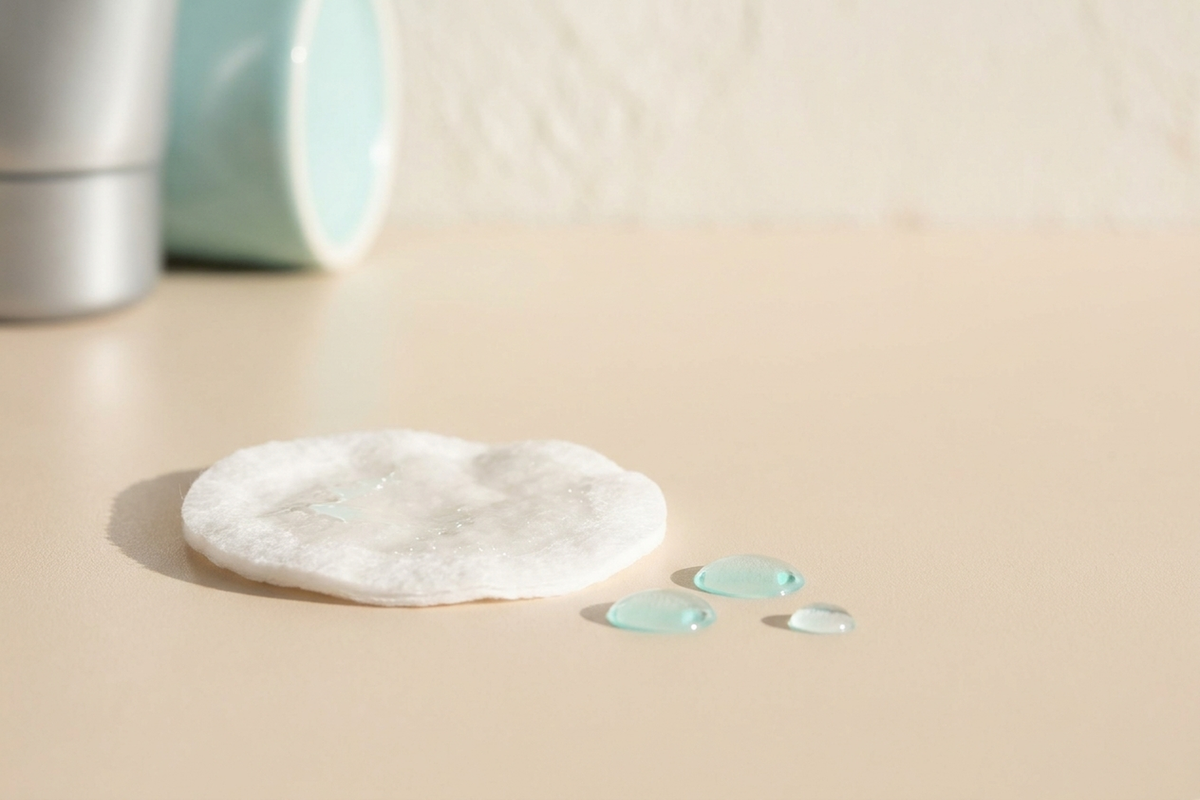
Water Glow Tonic (100 ml, 840 TL) brings glycolic acid and salicylic acid together with hyaluronic acid, aloe vera, panthenol, hibiscus extract, betaine, and allantoin in a single no-rinse formula. It is alcohol-free, is not recommended over open wounds, and is used by spraying two or three times onto a cotton pad and sweeping it gently over clean skin. Rather than layering the two acids as separate high-concentration products, getting to know a single pre-balanced formula — together with the gradual ramp-up schedule described above — offers a more predictable starting point.
If you would like a side-by-side view of which product suits your skin's needs best, see the product comparison page; if you want to learn what each ingredient does, take a look at the ingredient glossary. For a routine recommendation personalized to your skin's current needs, you can try the free AURA skin analysis; for the order of a daily routine, see our article on the morning and evening skincare routine, and for keeping your barrier healthy, our article on the skin barrier. For general questions, the frequently asked questions page can help as well.
Frequently asked questions
Can AHA and BHA be used on the same day?
Yes, it is possible for most skin. The safest approach is to start at a low concentration a few times a week and to raise the frequency while watching how your skin responds. If you see redness, stinging, or excessive flaking, reduce the frequency.
Which is applied first, AHA or BHA?
There is no single correct order; the general rule is to apply the lighter-textured, water-soluble product first (usually something like a toner) and richer formulas afterward. If you use them as two separate products, applying them on alternating days rather than in the same session reduces the risk of irritation.
Can sensitive skin use AHA and BHA?
Sensitive skin can generally try AHA/BHA by starting at a low concentration and a low frequency (once or twice a week). If you have a marked history of sensitivity or an active skin condition, you are advised to consult a dermatologist first.
Can AHA/BHA be used during pregnancy or while breastfeeding?
Which active ingredients are suitable during this period, and at what concentration, can vary from person to person. You must consult your doctor before starting acid-based products during pregnancy and breastfeeding.
Is a moisturizer needed after AHA/BHA?
Usually yes. Adding a moisturizing step after applying an acid, in order to support the skin barrier, helps balance any dryness and feeling of sensitivity.
Do acids in a no-rinse toner cause irritation?
Because no-rinse formulas stay on the skin longer, their effect can feel more noticeable than products that are rinsed off after cleansing. That is why the concentration in products of this kind is usually more measured, and why following a gradual ramp-up schedule matters.
Can I use AHA/BHA on the same night as a retinoid?
The general approach is to spread these two potent actives across separate nights rather than squeezing them into the same one. Applying AHA/BHA on the nights when you are not using a retinoid, for example, can reduce the risk of irritation. If you use a prescription retinoid, build this plan together with your doctor.