What Is a Bubble Mask? No-Rinse vs. Classic Masks
A bubble mask is a care mask that turns into a fine foam after being spread over the face, is patted into the skin in about 30 seconds, and does not need to be rinsed off with water. This is exactly where it differs from a classic clay mask and from most sheet masks: there is no rinsing step, it does not cleanse the skin, and it is added to a routine as a layer of hydration and support.
- A bubble mask is not rinsed off; a clay mask and most sheet masks are rinsed off or removed by peeling.
- A bubble mask is NOT a cleanser — it comes after the cleansing step and stays on the skin.
- It is generally used 2-3 times a week, with the frequency varying by skin type.
- It is patted in without waiting for it to dry; a serum/moisturizer and, if needed, makeup can be applied afterward.
What is a bubble mask?
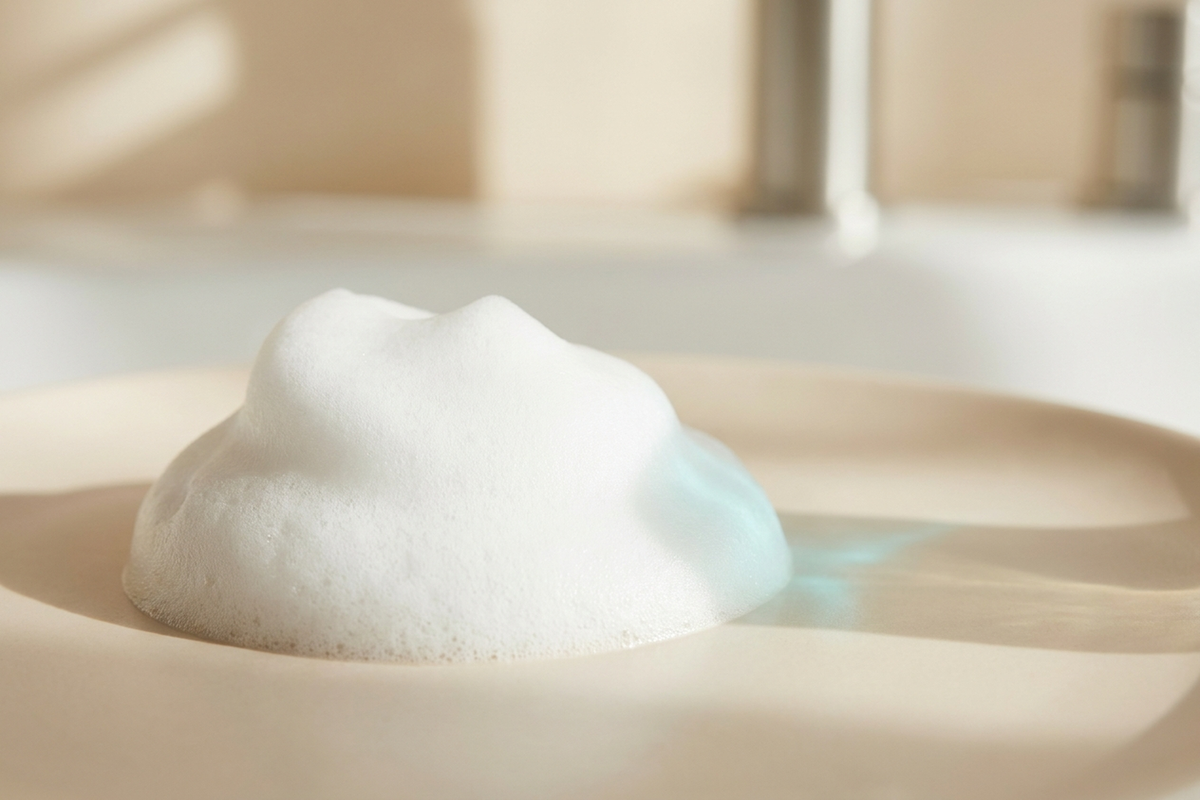
A bubble mask is a type of mask in which a gel- or cream-textured formula, once spread over the face and massaged gently, comes into contact with air and turns into a very fine foam. This foam is left on the skin for about 30 seconds and then patted in with the fingertips — it is not washed off. The moisturizing and soothing ingredients in the formula are left on the skin's surface during this process.
The 100 ml Water Glow Bubble Mask (970 TL) is a typical example of this format: it contains oat extract, lactobacillus lysate (a postbiotic), madecassoside, beta-glucan, ectoin, niacinamide, hyaluronic acid, panthenol, and betaine. There are no granules or scrub particles in the formula; the texture is entirely foam and it does not exfoliate mechanically.
The slight coolness and the airy texture felt during application are a physical effect created by the product's contact with air; once patted into the skin, it leaves behind no sticky or heavy feeling.
What is the difference between a rinse-off and a no-rinse mask?
The main line separating masks is usually not how powerful they are but the application format. Rinse-off masks (such as clay masks) are removed by washing with water; the oil-absorbing or clarifying components they contain are taken off the surface at the same time. No-rinse masks (bubble masks, most sheet masks, peel-off masks) are designed to stay on the skin — the aim is not to take something away from the skin but to leave something on it.
| Mask type | Rinsing | Time on skin | Is it a cleanser? |
|---|---|---|---|
| Bubble mask | Not rinsed; patted in | ~30 seconds | No |
| Clay mask | Rinsed off with water | 10-15 minutes | Partly (absorbs oil) |
| Sheet mask | Usually not rinsed; the remaining essence is patted in with the fingers | 15-20 minutes | No |
| Peel-off mask | Removed by peeling | 15-20 minutes | No |
Is a bubble mask a cleanser? (The most common misunderstanding)
No — this is the most common confusion around bubble masks. The foam texture and the phrase "comes off without washing" can give the impression that the product is a cleanser or a makeup remover. In fact, a bubble mask is not designed to remove makeup, sunscreen, or the day's build-up of grime; it does not take on that job, and it should not.
The correct order of use is this: first the face is cleansed gently, then the bubble mask is applied to clean skin. Water Glow Bubble Mask is not a cleanser — it is a care and support layer that comes after the cleansing step. Reversing this order (applying the mask before cleansing) both reduces the mask's effect and creates the risk of "locking in" residual grime and makeup on the skin.
Clay mask, sheet mask, and bubble mask: which one answers which need?
All three formats serve a different need and do not replace one another. A clay mask focuses on controlling oil and shine, a sheet mask on an intense, immediate boost of hydration, and a bubble mask on a quick layer of comfort and support that needs no rinsing.
| Need | Suitable mask type | Quick note |
|---|---|---|
| Oiliness, mattifying | Clay mask | Absorbs oil; removed by rinsing. |
| Immediate hydration and radiance | Sheet mask | Holds a concentrated essence; left on longer. |
| Quick soothing, barrier support | Bubble mask | No rinsing, and the risk of irritation is lower. |
| A fast routine when time is short | Bubble mask | Patted in within 30 seconds, with no waiting. |
To see which product group suits your skin type best, take a look at the product comparison page.
Where does a bubble mask fit in a routine?
Because a bubble mask is not rinsed off, it sits in the routine after cleansing and before active serums, as a layer of "preparation and support." The general order is as follows:
- Cleanse the skin gently.
- Prepare the skin with a toner.
- Spread the bubble mask over the skin, leave it on for about 30 seconds, and pat it in with your fingertips without rinsing.
- Then apply your serum.
- Finish the routine with a moisturizer.
For more on the overall flow of a routine and the order of the steps, see our morning and evening skincare routine article.
How many times a week should it be used?
No-rinse bubble masks are generally suitable for use 2-3 times a week; on sensitive or reactive skin you can start with 1-2 times a week and raise the frequency according to how your skin responds. Because it requires no rinsing, it is still not a daily product — it is a periodic support step added to a routine.
You can find more detail on how to decide mask frequency in general in our article on how often to use a face mask.
Can you wear makeup after applying it?
Yes. Because a bubble mask is not rinsed off, the skin is ready for makeup soon after the product has been patted in. Makeup can be applied over Water Glow Bubble Mask — there is no long absorption time to wait through, which makes it suitable for a morning routine or the run-up to a special day.
What do the active ingredients inside do?
The formula of a bubble mask is generally built from ingredients focused on hydration and barrier support; because it is not rinsed off, the aim is for those ingredients to remain on the skin's surface. For Water Glow Bubble Mask specifically, the standout components and their general contributions can be summarized as follows:
- Lactobacillus lysate (postbiotic): Obtained from a fermented source, this ingredient belongs to the postbiotic group that supports the balance of the skin microbiome and contributes to the skin's overall comfort.
- Beta-glucan: A polysaccharide that can be obtained from oats and is known for its moisture-binding and soothing properties; it helps support the look of the skin barrier.
- Madecassoside: A compound obtained from the Centella asiatica plant, frequently chosen in care formulas for its skin-comforting properties.
- Oat extract: Traditionally known for its soothing effect, it provides a feeling of comfort on skin that tends toward sensitivity.
- Ectoin: A protective molecule that supports the skin against external factors by hydrating it.
- Niacinamide: A form generally accepted to help balance the look of skin tone and clarify the appearance of pores.
- Hyaluronic acid and panthenol: These play a supporting role in binding moisture and holding it at the skin's surface.
For more on the general role of these ingredients in skincare, see our articles on niacinamide and hyaluronic acid, and for all ingredient terms, the ingredient glossary.
If you are wondering how to sequence a bubble mask alongside the other active ingredients in your routine (a toner containing AHA/BHA, for example, or a high-strength serum), take a look at our article on whether active ingredients can be used together.
Who is it suitable for, and who should be careful?
Thanks to a formula that requires no rinsing and leans on soothing ingredients, a bubble mask is generally a format suited to most skin types; it is a comfortable alternative especially for skin that dislikes the tight feeling left after rinsing. As with any new product, trying it on a small area first and observing how your skin responds is always a good approach.
If you have an active skin condition, or if your skin shows marked sensitivity, redness, or irritation, the safest course is to consult a dermatologist before adding a new care product to your routine.
Frequently asked questions
Should a bubble mask be rinsed off?
No. A bubble mask is not rinsed off with water; after being left on for about 30 seconds it is patted into the skin with the fingertips, and the routine continues with the next step (a serum or a moisturizer).
What is the difference between a bubble mask and a sheet mask?
A sheet mask is applied by leaving a fabric or gel layer soaked in essence on the face for a long time (15-20 minutes), whereas a bubble mask is patted into the skin as a foam in a far shorter time (about 30 seconds). Neither is usually rinsed off, but the time on the skin and the texture differ.
Can a bubble mask be used instead of a cleanser?
No. A bubble mask is not a cleanser and does not remove makeup or grime. It is a care and support product applied to clean skin after the cleansing step.
How many times a week should a bubble mask be used?
As a general starting point, 2-3 times a week is suitable; sensitive skin can start with 1-2 times a week and raise the frequency according to how the skin responds.
Is a moisturizer necessary after a bubble mask?
Yes, a bubble mask is a step added to your routine rather than one that replaces it. After patting it in, you should carry on as usual with the other steps of the routine, such as a serum and a moisturizer.
What does the postbiotic (lactobacillus lysate) in a bubble mask do?
Lactobacillus lysate is a postbiotic ingredient obtained from fermented sources, and it is thought to contribute to overall skin comfort by supporting the balance of the skin microbiome.
Can you apply makeup over a bubble mask?
Yes. Because a bubble mask is patted in quickly, you can move on to makeup after applying it; no long waiting time is needed.