Pearl Extract vs. Synthetic Glitter: The Real Difference
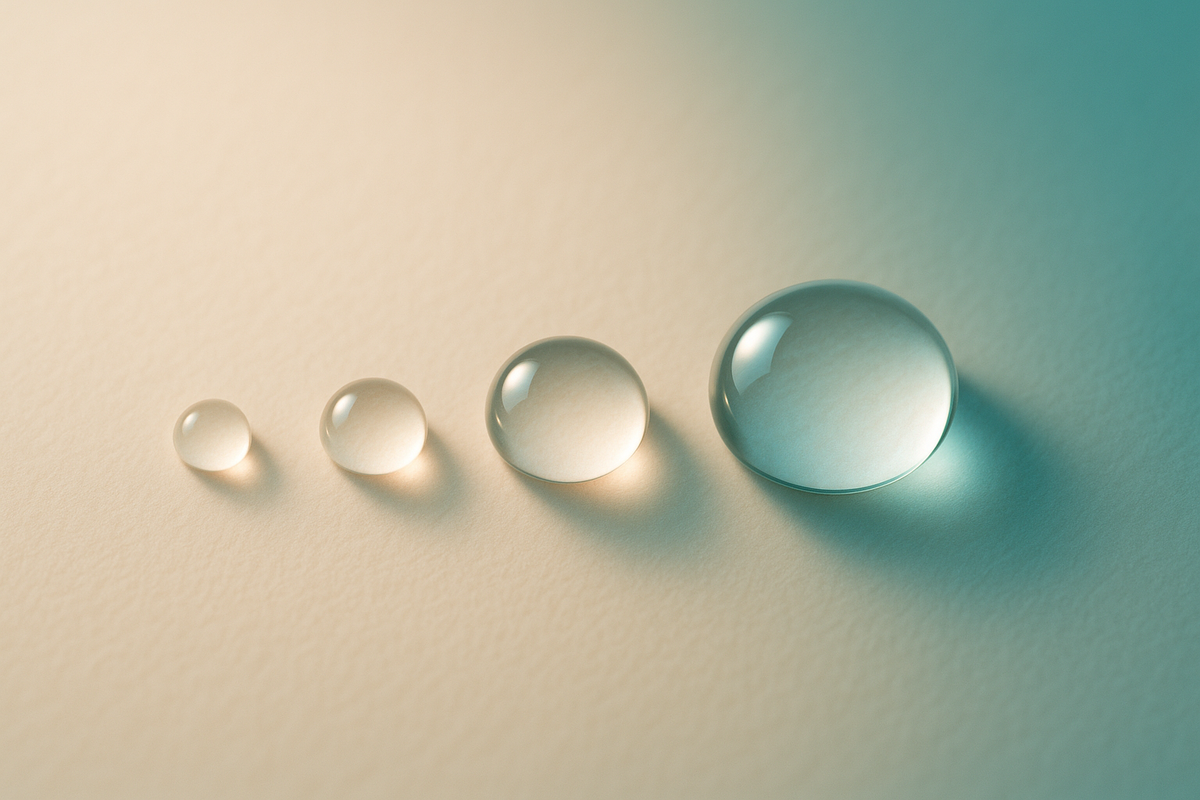
Pearl extract refracts light through many fine, translucent layers and leaves a soft, diffuse radiance on the skin; mica and synthetic glitter, by contrast, are solid particles that reflect light sharply from a single point. The result on skin is visibly different: pearl extract gives the sense that the skin is glowing on its own, while glitter and mica particles create the look of something applied on top.
Short answer
- Pearl extract refracts light layer by layer; mica and synthetic glitter reflect it sharply from a single point.
- Synthetic glitter is usually a particle of cut plastic film and is the subject of the microplastics debate; mica is a natural mineral, but it too sits as a particle and shines point by point.
- Real pearl is a natural material of mollusk (oyster/mussel) origin — which is why products containing pearl extract are not vegan.
- Shine Boost Face & Body Serum contains real pearl extract and no synthetic glitter or mica; it is intended for special occasions and evening use rather than daily use.
What is pearl extract and how is it obtained?
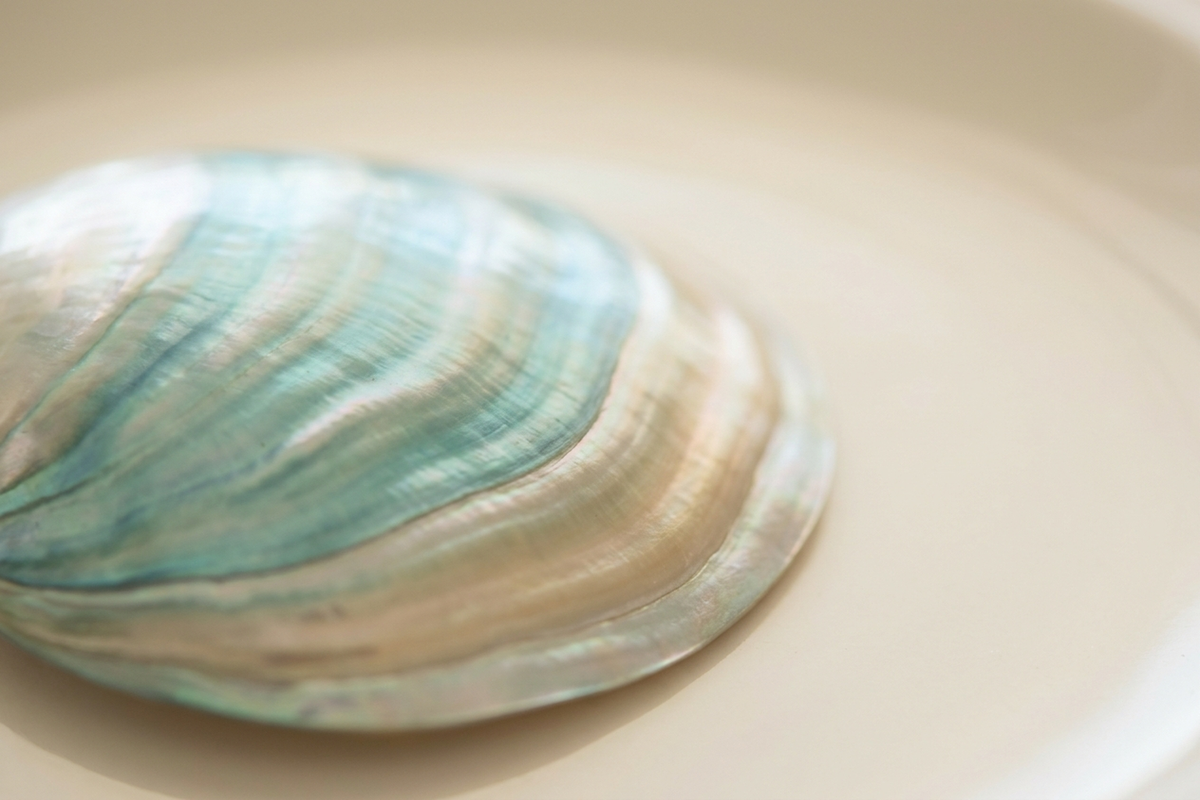
A pearl is a layered structure that oysters and some mussel species produce inside their shell in response to a foreign particle. This structure is known as nacre (mother-of-pearl) and is formed by aragonite crystals stacked with protein layers called conchiolin. In cosmetics, pearl extract is generally used in the form of ground pearl powder or a pearl extract; both methods aim to carry the pearl's layered, light-refracting structure into the formula.
This multilayered architecture is thought to make light reflect not off a single surface but through refraction across many stacked fine layers. This is regarded as the source of the pearl's characteristic soft, multidirectional shimmer. You can see how natural actives of this kind are classified on the ingredient glossary page.
What are mica and synthetic glitter, and how do they work?
Mica is a natural silicate mineral with a layered structure. In cosmetics it is ground into fine flakes and is usually coated with metal oxides such as titanium dioxide or iron oxide to give it color and shine. It is one of the most widely used shimmer raw materials in makeup products such as highlighters, eyeshadows and illuminators.
Synthetic glitter is a different category. It is generally produced by cutting a thin plastic film (most often polyester/PET) into small particles, with a colored or metallic coating sometimes applied on top. Unlike pearl extract, both mica and synthetic glitter are not extracts but solid particles that can be perceived individually on the skin.
How light behaves: pinpoint sparkle or soft radiance?
What really determines whether shine looks natural or artificial is how light reflects off the surface. Light reflected from a flat, solid surface — a mica flake or a glitter particle — is pinpoint: it gives a sharp sparkle from a certain angle, and that sparkle disappears or shifts when the angle changes. The eye usually reads this as something applied on top.
The multilayered structure in pearl extract, by contrast, refracts light and spreads it across a wide area. The shine does not gather in a single point; it looks like a soft radiance blended into the skin's overall tone. This difference is also the basis of the distinction between a glass skin effect and a visibly glittery, sparkly look; you can find more detail in the article on glass skin.
Comparing the three sources
Although pearl extract, mica and synthetic glitter all serve the same purpose (shine), they differ considerably in source, texture and behavior. The table below summarizes the three materials side by side; to see the general differences between products, you can also look at the product comparison page.
| Property | Pearl extract | Mica | Synthetic glitter |
|---|---|---|---|
| Source | Mollusk (oyster/mussel), natural and organic | Natural mineral (silicate) | Usually plastic film (PET) |
| Structure | Layered extract or powder, blends into the formula | Fine mineral flake | Cut particle, solid film |
| Light behavior | Diffuse, multidirectional soft shimmer | Pinpoint, sharp shine | Pinpoint, the most pronounced shine |
| Grainy feel | None, sinks into the skin | Slightly noticeable | Pronounced, visible to the eye |
| Transfer to clothing | Rarely transfers | Can transfer | Transfers easily, hard to remove |
| Microplastic? | No | No, mineral | Mostly yes |
| Vegan? | No (mollusk origin) | Generally yes (mineral) | Generally yes (synthetic) |
Grainy look and transfer to clothing
The flat, light, planar structure of synthetic glitter clings easily to surfaces through static electricity, which explains why it transfers to fabric, bedding or skin and is hard to wash out. Mica flakes can likewise leave a visible grainy feel, especially when applied heavily.
Pearl extract-based formulas behave differently, because the extract blends into the formula rather than remaining on the surface as a separate solid particle. As with Shine Boost Face & Body Serum, formulas of this kind rarely transfer to clothing; and if they do, they wash out easily.
The microplastics debate
Synthetic glitter mostly consists of plastic-based particles (usually PET) that do not break down easily in nature. Washed into water systems, these particles come up frequently as one of the most concrete examples of the microplastics debate in the cosmetics industry. Mica, being of mineral origin, falls outside this debate, but it still remains in the formula as a solid particle.
Pearl extract is not plastic-based either; it is a natural material of animal origin. For this reason the VORELL Shine Boost Face & Body Serum formula contains no synthetic glitter and no mica — the shine comes entirely from real pearl extract.
Why is pearl extract not vegan?
A pearl is a natural material that a living mollusk produces inside its shell. Pearl extract is therefore of animal origin and does not fall within the definition of vegan — unlike mineral-sourced mica or synthetically produced glitter.
VORELL does not hide this: Shine Boost Face & Body Serum is not a vegan product, because the real pearl extract it contains comes directly from mollusks. For anyone looking for a vegan alternative, this is clear information to have when evaluating the product.
Makeup highlighter or treatment serum?
Makeup highlighters generally consist of mica, pigments and film-forming binders; they leave a thin layer on the skin and are removed with makeup remover. The proportion of skincare actives they contain is limited, because their main purpose is color and shine.
Shine Boost Face & Body Serum (50 ml, 1,140 TL) belongs to a different category: it is a serum containing skincare actives such as niacinamide, squalane, jojoba oil, ectoin, ceramide NP, centella asiatica, hyaluronic acid, panthenol and a peptide complex, and its shine comes from real pearl extract. It is not designed for daily use — it is intended for special occasions and evening preparation. Its main area of use is the body (arms, legs, décolleté); it can also be used on the face.
For everyday hydration and radiance, a different product is more suitable: Water Glow Serum (30 ml, 999 TL) contains a hyaluronic acid complex, ectoin and panthenol, and can be included in a morning and evening routine. The table below summarizes which approach suits which situation.
| Situation | Recommended approach | Why |
|---|---|---|
| Daily skincare routine | A care-focused serum that is not pearl extract-based | Continuous hydration and barrier support come first; radiance is a secondary aim |
| Special occasions, evening events, before photos | Pearl extract-based serum (Shine Boost) | Soft, natural-looking shine; rarely transfers to clothing |
| Visible radiance on the body (arms, décolleté, legs) | Pearl extract-based serum (Shine Boost) | The area it was formulated for; can be applied over a large surface without leaving grit |
| Intense, pinpoint sparkle for stage or a party | Mica-based makeup product | Preferred when a high-intensity, eye-catching shine is wanted |
| Vegan products as a priority | Mica-based product | Mica is mineral-sourced; pearl extract comes from mollusks and is therefore not vegan |
You can find formulation details and Dr. Nesi Bahar's medical review process on the brand fact sheet page; to take a closer look at the product, visit the Shine Boost Face & Body Serum page.
Frequently asked questions
Is pearl extract harmful to the skin?
Pearl extract used in cosmetic formulas serves as a supporting radiance ingredient in skincare products, and in VORELL formulas it passes through the medical review of Dr. Nesi Bahar. Sensitive skin can try a new product on a small area first and observe the reaction; anyone with a serious skin condition should consult their dermatologist before using the product.
Is mica a microplastic?
No. Mica is a natural mineral (a silicate) and is not plastic-based like synthetic glitter. However, because it is used in cosmetics as a solid particle, it reflects light in a pinpoint way similar to synthetic glitter and can leave a grainy feel.
Why is Shine Boost not used every day?
Shine Boost Face & Body Serum is designed not as a daily treatment serum but for special occasions and evening preparation. For everyday hydration and radiance, a hyaluronic acid-focused product such as Water Glow Serum is a more suitable choice.
Is pearl extract vegan?
No. Real pearl is a natural material of mollusk (oyster/mussel) origin; products containing pearl extract therefore do not fall within the definition of vegan.
Why do products with synthetic glitter rub off on clothes?
Synthetic glitter usually consists of cut particles of plastic film; it has a flat, light structure that clings to surfaces through static electricity. This property makes it transfer easily to fabric and hard to remove by washing.
Can Shine Boost be used on the face?
Yes, but its main area of use is the body (arms, legs, décolleté). It can also be used on the face; during application it is enough to blend it in gently so that it leaves a thin layer.
Apart from the light effect, what is the biggest difference between pearl extract and mica or synthetic glitter?
It is a difference of source and content: pearl extract is a single natural material of animal (mollusk) origin, whereas mica is of mineral origin and synthetic glitter is mostly plastic-based. This difference directly determines the texture as well as the microplastic and vegan status.