
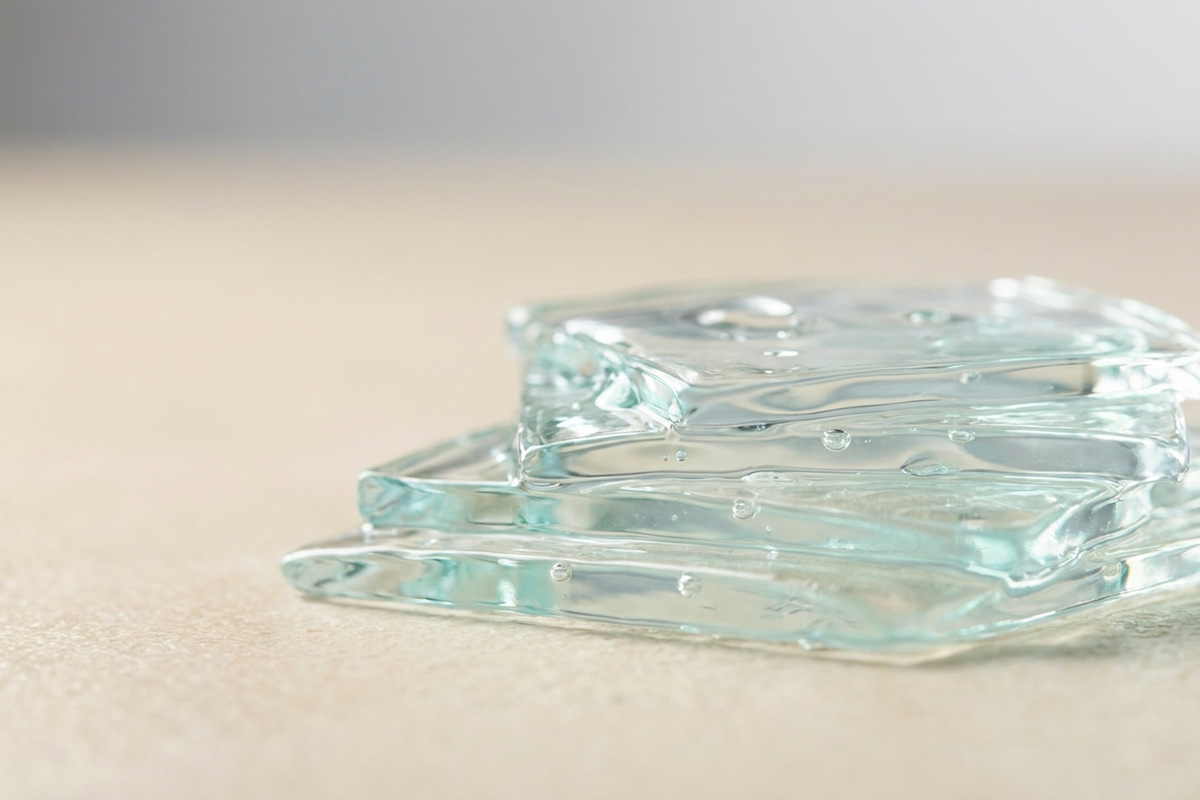
Why Your Hydrating Serum Isn't Working: The "Moisture Lock"
A humectant such as hyaluronic acid draws water from the air or from the deeper layers of the skin; when ambient humidity is low (air conditioning, central heating, a dry climate) that water can be pulled up from the depths of the skin to the surface, evaporate from there, and leave the skin feeling drier than before. The fix is not to drop the serum, but to add an emollient or occlusive layer on top that seals the moisture in.
Short answer:
- A humectant serum (such as hyaluronic acid) draws moisture in but does not lock it in on its own; in dry air that moisture can escape back into the lower layers of the skin.
- Hydration is completed in three layers: humectant (draws), emollient (softens), occlusive (locks).
- Serum is applied to cleansed and lightly patted-dry skin, not to wet skin; otherwise it is diluted and its effect drops.
- Air conditioning and central heating lower ambient humidity, which is why the occlusive layer matters more during the hours you spend indoors.
Why Can Hyaluronic Acid Make Skin Even Drier?
Hyaluronic acid and similar humectants (such as sodium PCA, betaine and ectoin) bind water molecules to themselves by virtue of their molecular structure. In an environment with moderate to high relative humidity, most of that water is carried from the air to the skin. When the environment dries out - in a closed, air-conditioned office or a centrally heated home - there is not enough moisture left in the air to draw on.
In that case the humectant molecule turns to the nearest source of moisture: the skin's own lower layers. The result is a short-lived feeling of plumpness in the upper layer, but the water carried from the depths to the surface evaporates quickly and the overall moisture balance is disrupted. Users usually describe this as "I applied a serum but my skin felt tight" or "it got even drier."
This does not mean that the humectant is not working; what hyaluronic acid contributes to the skin is a well-known effect. The problem is leaving the humectant on its own, with nothing sealing it in. That is why a hydration routine is not built from a single product but from layers that complete one another.
It helps to separate two different concepts here: "dryness" means the skin produces little oil, while "dehydration" means its water content is low. Even oily skin can become dehydrated and feel tight; what it needs then is not more oil but correctly layered hydration. The moisture-lock question is largely about that dehydration side.
The Three Layers of Moisturizing: Humectant, Emollient, Occlusive
Skincare products broadly take on one of three roles. A humectant draws water in, an emollient softens and smooths the surface, and an occlusive acts as a lid that slows the evaporation of that moisture. A routine is usually a combination of all three.
| Layer | Role | Example ingredient types |
|---|---|---|
| Humectant | Draws in and binds water | Hyaluronic acid, sodium PCA, betaine, ectoin, glycerin |
| Emollient | Softens and smooths the surface, fills in fine roughness | Squalane, jojoba oil, ceramide NP, plant oils |
| Occlusive | Forms a thin film that slows the evaporation of moisture | Rich creams, balm-textured treatments, wax- or oil-heavy formulas |
VORELL's Water Glow Serum (30 ml, 999 TL) works mainly in the humectant layer: its hyaluronic acid complex, sodium PCA and betaine draw moisture in. Shine Boost Face & Body Serum (50 ml, 1,140 TL), with its squalane, jojoba oil and ceramide NP, sits closer to the emollient layer. The occlusive layer is usually provided by a separate rich cream or balm as the final step of the day.
Wet or Dry? The Moment of Application Changes the Effect
Some product formulas are deliberately designed to be used on damp skin; a rich cream applied straight out of the shower while the skin is still slightly damp, for example, traps the water already there more easily. But this rule does not apply to every product.
With a water-based, lightweight, fluid serum the situation is reversed. A serum applied while droplets of water are still sitting on the skin mixes with that water, becomes diluted, and spreads less evenly across the skin's surface. The concentration drops, and so does the effect you feel.
This difference comes down to whether the formula is an "open" or a "closed" one. A rich, oil-heavy cream is designed to trap water and is not disturbed by extra water; it actually benefits from it. A water-based serum, on the other hand, is designed to deliver its ingredients to the skin as they are, and extra water disrupts that delivery. Label instructions such as "do not apply to wet skin" or "apply to damp skin" come from this difference.
Why Isn't VORELL's Serum Applied to Wet Skin?
Water Glow Serum falls squarely into that second group and is not applied to wet skin; its effect drops. Its water-based, lightweight formula is diluted on a wet surface and loses its concentration, and because it does not leave an oily layer it does not lock moisture in on its own.
Correct use goes like this: cleanse the skin, pat it lightly dry with a towel (no beads of water should be left shining on the surface, though the skin may still feel slightly damp), and apply two pumps of serum. The "wetness" meant here is skin that has been rinsed with water and not yet dried; the thin film left on the skin after toner does not fall into that description, since toners are designed to be left on without rinsing.
What Should the Correct Layering Order Be?
The general rule is to work from the thinnest, most watery texture to the richest, oiliest one. In the reverse order - a rich cream first, then a thin serum - the serum's ingredients cannot penetrate skin that has already been sealed.
The reason is simple: an oil-heavy layer forms a film of low permeability on the surface of the skin. Once that film is in place, a water-based product applied on top stays on the surface instead of reaching the skin, and is largely rendered ineffective. Applying the layers in the right order is what allows each product to do its own job.
- After cleansing, Water Glow Tonic (100 ml, 840 TL) is applied to a cotton pad and swept gently over the skin; it is not rinsed off.
- The skin is patted lightly dry, then two pumps of Water Glow Serum are applied.
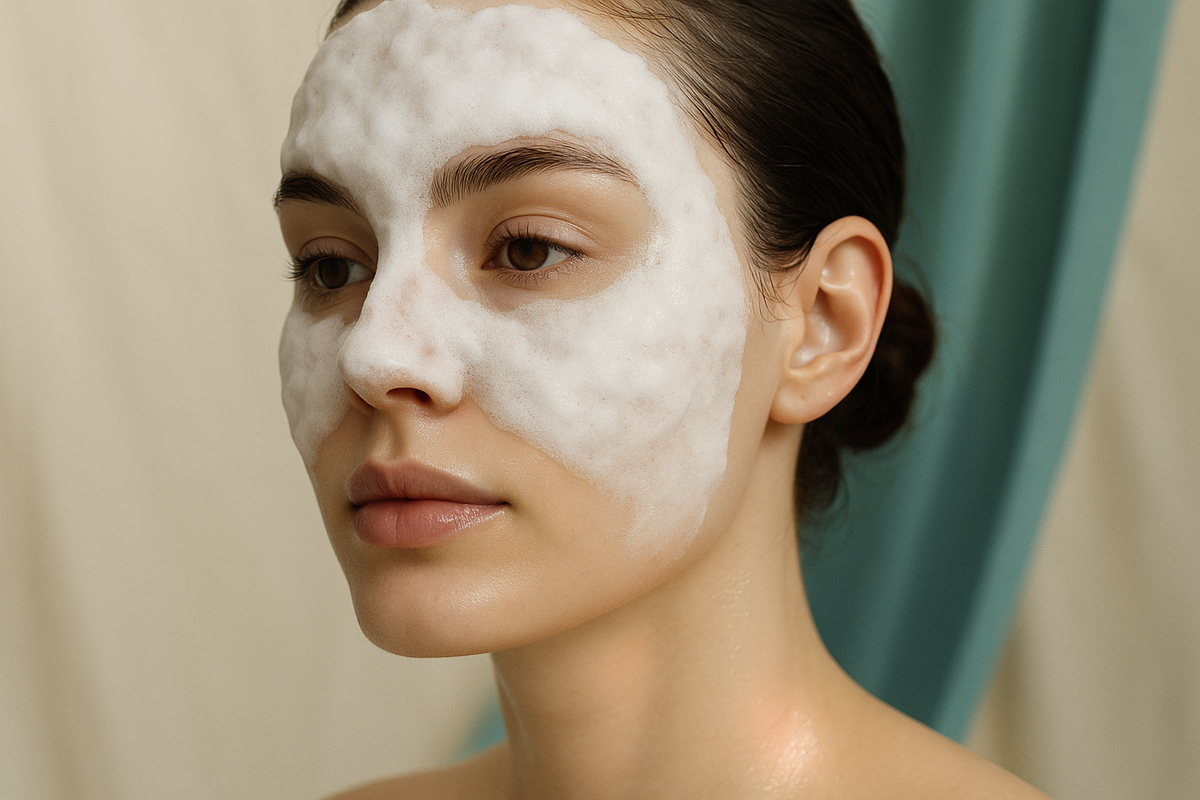
- A few times a week, as an addition to the routine rather than a replacement for the cleansing step, the foam of Water Glow Bubble Mask (100 ml, 970 TL) can be worked into the face for 30 seconds and left on without rinsing.
- The daytime routine is completed with an emollient or occlusive cream; this step locks moisture in on top of the previous layers.
For those who want to use the tonic, serum and mask together, The Glow Ritual 3-Piece Set (2,199 TL; 2,809 TL when bought separately) brings these three steps together in one package; Shine Boost is not included in this set and should be considered a separate product.
How Air Conditioning and Central Heating Affect the Skin
Spending hours in an air-conditioned or centrally heated space both lowers the relative humidity around you and causes water on the skin's surface to evaporate faster. In such an environment a humectant product alone is not enough; an emollient or occlusive layer must always be added on top.
When the skin starts to feel tight during the day, Water Glow Tonic can be used for a light top-up of moisture. This does not replace full layering in the evening routine, though; the tonic is a daytime support, while layering is the basic daily routine.
Common Mistakes and How to Fix Them
The table below summarizes the most common mistakes around moisture lock and their practical fixes. For a more comprehensive list, see our article on the mistakes people make when choosing a moisturizer.
| Mistake | Result | Fix |
|---|---|---|
| Using only a humectant serum and applying nothing on top | The skin soon feels tight, sometimes drier than before | Close the layer after the serum with an emollient/occlusive cream |
| Applying the serum to freshly washed, not-yet-dried skin | The product is diluted, its concentration drops, it does not spread evenly | Pat the skin lightly dry and apply it when slightly damp (no droplets) |
| Not adjusting the routine in air-conditioned/heated spaces | The skin can feel tight or flaky by the evening | Strengthen the occlusive layer during indoor spells and top up with tonic during the day |
| Applying the layers from richest to thinnest | A lightweight serum cannot penetrate skin that has already been sealed | Start with water-based/lightweight textures and finish with the richest product |
| Using Shine Boost every day like a facial moisturizer | Since the product is not designed as a daily face serum, it can unbalance the routine | Use Shine Boost for special occasions and evening prep or on the body, and cover daily facial hydration with Water Glow Serum |
| Thinking about moisture lock only in the summer months | In winter, indoor heating can dry the skin as much as summer does, or even more | Adjust the routine to the humidity of the space you are in, not to the season |
Frequently asked questions
Why is my hyaluronic acid serum drying out my skin?
In dry environments, hyaluronic acid - a humectant - may draw water from the skin's own lower layers when it cannot find enough moisture in the air; this can leave a temporary plumpness at the surface while disrupting the overall moisture balance and making the skin feel drier. The fix is not to give up the serum but to add an emollient or occlusive layer on top that locks the moisture in.
In what order should I apply moisturizing layers?
The general rule is to work from the thinnest/most watery texture to the richest/oiliest: tonic, then serum, then a richer cream if needed. Waiting a few seconds before moving on to the next step is enough to let each layer settle into the skin.
Why shouldn't I apply Water Glow Serum to wet skin?
Because the serum is water-based and lightweight, it is diluted on wet skin, its concentration drops and the effect you feel is reduced. After cleansing, it is best to pat the skin lightly dry and apply two pumps while it is slightly damp, with no droplets of water left.
What is the difference between an emollient and an occlusive?
An emollient is the layer that softens and smooths the skin's surface, usually made up of oils or oil-like ingredients (such as squalane, jojoba oil and ceramides). An occlusive forms a thin film on the surface that slows the evaporation of moisture, and is usually a richer cream; the two can be found together in one product.
Should I change my routine in an air-conditioned or centrally heated space?
Yes; low ambient humidity causes the water at the skin's surface to evaporate faster. During these spells, rather than using a humectant alone, it helps to always add an emollient/occlusive layer on top and to top up moisture with a tonic during the day if needed.
Can I use Shine Boost Face & Body Serum on my face every day?
Shine Boost is not recommended as a daily face serum; it is primarily made for the body and designed for special occasions and evening prep. For daily facial hydration, a humectant-led product such as Water Glow Serum is a better fit.
How do I work out which layer my skin needs?
VORELL's free AI-powered skin analysis, AURA, evaluates a glow score and skin metrics from two photos and offers a personalized routine suggestion; this assessment can be a starting point for working out which layer is missing. The tool does not store photos and is not a medical diagnostic tool.

%20that%20water%20can%20be...)