Is a Face Toner Really Necessary?
Short answer:
- A face toner isn't mandatory, but when it's formulated correctly it adds a real function to a routine: it removes residue left after cleansing, supports moisture balance, and prepares the ground for the steps that follow.
- The problem isn't the toner itself but the wrong formula — older-generation, alcohol-heavy toners can dry the skin, while alcohol-free, hydration-focused formulas don't carry that risk.
- Pores don't physically shrink; a toner can only make them look less noticeable by removing excess at the surface.
Yes — a correctly formulated, alcohol-free face toner plays a functional role in a routine: it gently removes the residue left on the skin's surface after cleansing, helps support moisture balance, and prepares the ground so the serum and moisturizer applied afterward settle into the skin more easily. It isn't a mandatory step, but when its ingredients are well chosen, it's a step we recommend not skipping.
What Exactly Does a Toner Do in a Routine?
A toner is an intermediate step that acts as a bridge between cleansing and serum/moisturizer. Even the gentlest cleansers can leave a thin residue on the skin; a toner helps remove it.
The cleansing step can leave a temporary feeling of dryness on the skin's surface. A toner containing humectant ingredients works to balance this feeling and prepares the skin for the steps that follow. A well-formulated toner also gives the skin a sense of freshness the moment it's applied.
What Changes If You Skip Toner?
Skipping toner doesn't invalidate your routine; serum and moisturizer still do their job on their own. However, the soap/cleanser residue left on the skin's surface right after cleansing and the temporary feeling of dryness carry over to the next step when no toner is used.
In practice, the difference shows up most for people whose skin feels tight after cleansing and for those who want to support the look of their pores with an acid-containing toner. For someone whose routine already includes a good serum and moisturizer, a toner is a complementary rather than an essential contribution.
Why Does the Difference Between Alcohol-Based and Alcohol-Free Toners Matter?
Much of the question "is a toner necessary" actually comes down to "which toner." Although older-generation toners heavy in alcohol (ethanol) give a feeling of freshness in the short term, they can weaken the skin's natural barrier over time and increase its tendency toward dryness. Alcohol-free, hydration-focused formulas aim to offer that same freshness without the drying risk.
| Feature | Alcohol-Heavy Toner | Alcohol-Free Toner (Water Glow Tonic) |
|---|---|---|
| Feel after application | Tightness, a drawn feeling, stinging | Soft, refreshing |
| Long-term effect | Can increase the tendency toward dryness | Hydration support with HA, aloe vera and panthenol |
| Suitability for sensitive skin | Generally not recommended | Suitable |
| Rinsing | Varies by formula | Not rinsed off |
| Main ingredients | Ethanol-heavy | Glycolic acid (AHA) + salicylic acid (BHA) + hyaluronic acid + betaine + allantoin |
Is There a Connection With the Look of Pores?
It isn't possible for pores to physically "open and close"; pore size is largely determined genetically, and no toner can change that permanently. By gently removing excess oil and residue from the skin's surface, a toner can only make the appearance of pores less noticeable.
In other words, a toner doesn't shrink pores; by reducing congestion and buildup around them, it can contribute to a smoother-looking surface. Oil-soluble ingredients such as salicylic acid (BHA) support this by working into the pore.
How Does Each Skin Type Benefit From a Toner?
A correctly formulated, alcohol-free toner can suit almost every skin type; the critical point isn't skin type but the formula's ingredients.
| Skin Type | Expected Contribution From a Toner |
|---|---|
| Oily / combination | May help balance excess oil and reduce shine in the T-zone |
| Dry | Hydration-focused ingredients can add a feeling of plumpness by supporting the absorption of the following steps |
| Sensitive | Alcohol-free, gentle formulas can be added to the routine without the risk of irritation |
| Normal | May help maintain balance and complete the routine |
Clarifying your skin type is the first step to choosing every step correctly, toner included; on this subject you can take a look at our guide to identifying your skin type correctly.
How Do You Use VORELL Water Glow Tonic?
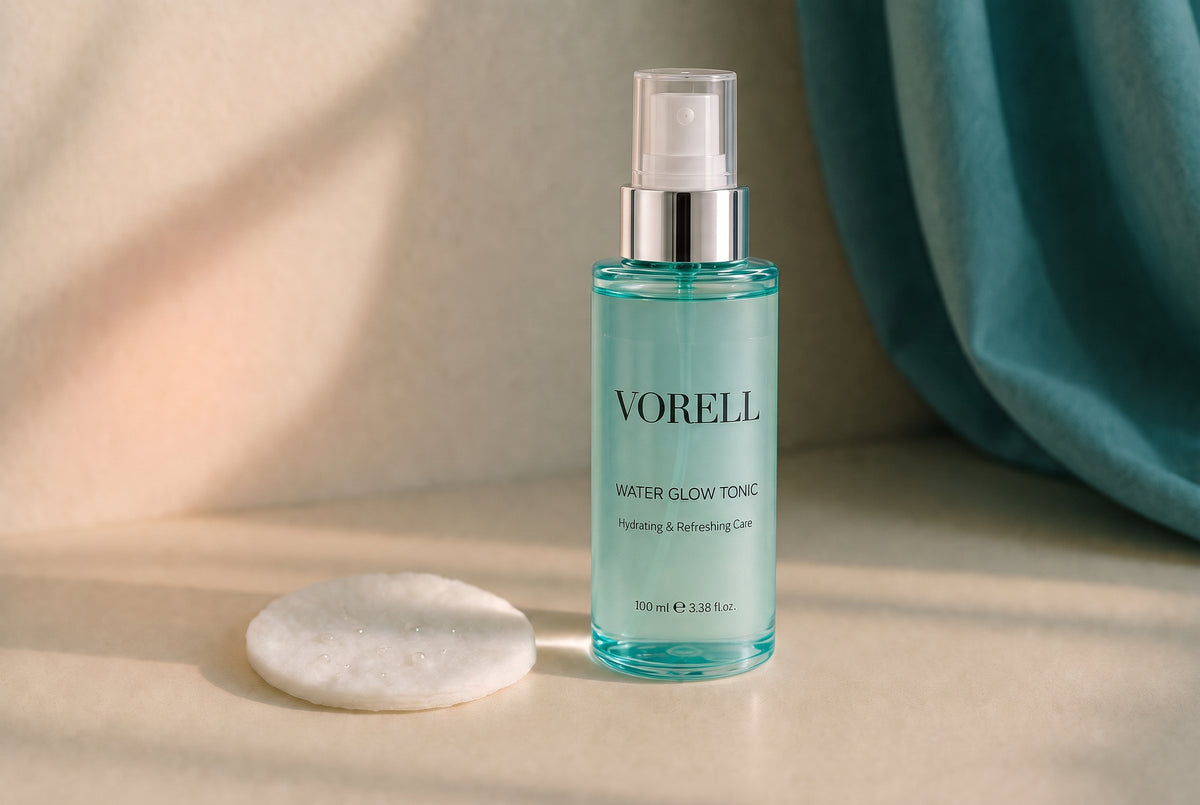
Water Glow Tonic was designed to move away entirely from the alcohol-heavy structure of classic toners that dries out the skin. On one side of the formula there's a gentle acid duo: glycolic acid (AHA) helps shed dead cells at the surface, while salicylic acid (BHA) works into the pore to support a clearer-looking pore appearance. On the other side, hyaluronic acid, aloe vera, panthenol, hibiscus extract, betaine and allantoin get to work; these help keep the purifying step from leaving a feeling of dryness.
Application is simple: spray two or three times onto a cotton pad and sweep it gently over clean skin — no rinsing needed. It contains no alcohol and is not a cleanser on its own — always use it after the cleansing step. It is not recommended on open wounds.
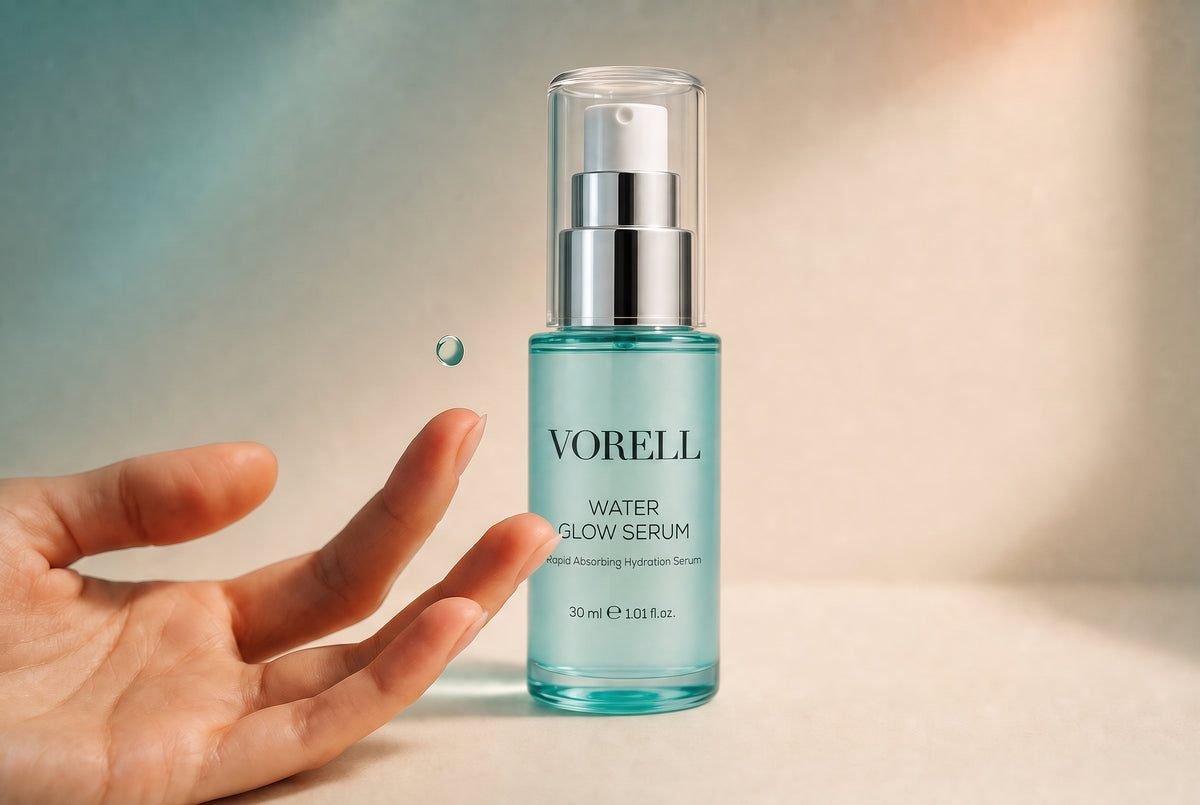
The 100 ml Water Glow Tonic is 840 TL. For those who want to try the tonic, serum and mask together, The Glow Ritual 3-Piece Set (2,199 TL, versus 2,809 TL when bought separately) offers a 610 TL saving; anyone who wants to look at the serum step in the set on its own can visit the Water Glow Serum page.
What to Watch Out For When Using a Toner
- Spraying two or three times onto a cotton pad and sweeping it gently over the skin ensures the product is distributed evenly.
- No rinsing is needed after the toner; waiting for the skin to dry before applying serum gives a better result, especially with hydration-focused serums.
- If you're using acid-containing toners, don't skip sun protection during the day.
- Toners with a high proportion of alcohol, menthol or strong fragrance can weaken the skin's natural barrier over time; for that reason, alcohol-free options should be preferred.
- If you have a skin condition such as redness or eczema, it's recommended that you consult your dermatologist before adding a new active ingredient.
Anyone who wants to read in more detail about why alcohol-free formulas should be preferred can look at our article on why alcohol-free toner matters.
Conclusion: Necessary or Not?
A correctly formulated, alcohol-free toner isn't an "extra" in a routine that can be overlooked; it's the bridge that establishes the balance between cleansing and care. A routine can be maintained without a toner, but when you choose a formula that respects your skin, a toner can become one of the most satisfying steps in it.
If you'd like to review your whole routine, you can also take a look at this article on the mistakes commonly made when choosing a moisturizer.
Frequently Asked Questions
Can I build a good routine without a toner?
Yes, that's possible. A toner isn't a mandatory step; but by removing residue after cleansing and supporting moisture balance, it prepares the skin for the steps that follow and is a complement that contributes to your routine's overall effectiveness.
Should alcohol-based toners be avoided entirely?
Because alcohol-heavy toners can have a drying effect, especially for sensitive and dry skin, alcohol-free alternatives are generally a safer choice. Even on oily skin, alcohol-free formulas may be preferable, since they carry a risk of weakening the barrier over the long term.
How many times a day should I use a toner?
Gentle, alcohol-free formulas are generally suitable for use twice a day, morning and evening, right after the cleansing step.
Does a toner really shrink pores?
No. Pore size is determined genetically, and a toner can't change it permanently. A toner can only help make pores look less noticeable by removing excess at the surface.
Can I use Water Glow Tonic instead of a cleanser?
No. Water Glow Tonic is not a cleanser and is always applied after the cleansing step. It is not recommended on open wounds.
Which products should a toner be used with?
A toner should be thought of as a step after cleansing and before serum. You can find Water Glow Tonic together with Water Glow Serum and Water Glow Bubble Mask in The Glow Ritual set.