What Is a Serum? What It Does and How to Use It
A serum is a care product with a lighter texture than a cream that carries active ingredients into the skin in small molecules and at high concentration; it focuses on goals such as hydration, vitality, and glow. It does not take the place of a cream — it is applied after cleansing and toner and before moisturizer, pressed in lightly with your fingertips.
- What a serum is: A care step with small molecules that carries active ingredients at high concentration and has a lighter texture than a cream.
- Where it fits: It is applied after cleansing and toner, before moisturizer; it does not replace your cream, it completes it.
- How to apply it: A few drops, pressed in gently with the fingertips rather than rubbed.
What Is a Serum?
A serum is a light-textured formula used in a skincare routine after cleansing and toner and before moisturizer, carrying small-molecule active ingredients at high concentration. Compared with creams and lotions, it has a structure that does not "dilute" its contents, meaning it holds active ingredients in a more concentrated form.
Thanks to this difference in concentration, serums can penetrate the skin quickly and support the effect they target — hydration, vitality, a glowing look — more noticeably. Still, a serum is not a skincare routine on its own; it needs to be completed with a cream or moisturizer that prevents moisture loss.
What Is the Difference Between a Serum and a Cream?
These two products are not rivals but complements. Because their jobs differ, using them together makes a routine more complete:
| Feature | Serum | Cream |
|---|---|---|
| Texture | Water-based or very light, gel-like | Richer, occlusive (locks moisture in) |
| Function | Delivers active ingredients into the skin quickly | Seals that effect in on top and prevents moisture loss |
| Absorption speed | Absorbs within seconds | Forms a layer that settles more slowly |
| Place in the routine | After toner, before moisturizer | After serum; the last step of the routine (apart from SPF) |
In short, a serum "supplies the ingredients" while a cream "locks those ingredients into the skin." Neither takes the place of the other; used together, your routine becomes far more complete.
What Does a Serum Do?
The main areas serums focus on are these:
- Hydration support: By supporting the skin's water-holding capacity, it can give a plump, "glass-like" appearance.
- Vitality and radiance: On skin that looks dull, it can support a more luminous feel and appearance.
- Supporting the skin barrier: Gentle, alcohol-free serum formulas can nourish the skin's natural protective layer without taxing it.
- Targeted care: Formulas carrying brightening ingredients such as pearl extract, which spreads light evenly across the surface, or barrier-supporting ingredients such as ceramides and peptides, focus on a specific need.
One important point: a serum is not a treatment product; it is a care step that supports the look of the skin. If you have a skin condition such as acne, eczema, or rosacea, you are advised to consult a dermatologist first.
How Do You Use a Serum? The Right Order of Application
To get the most out of a serum, the order of application is critical:
- Cleansing: Cleanse your face with a gentle cleanser.
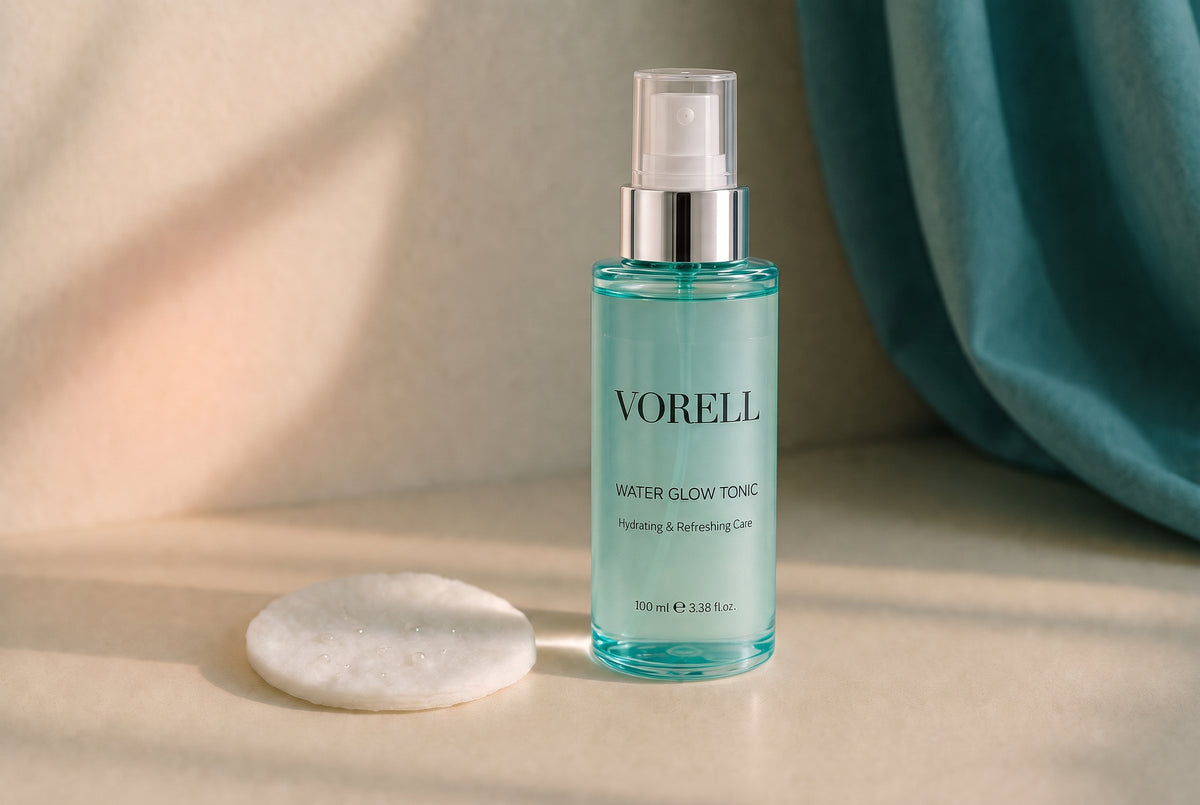
- Toner: Apply an alcohol-free toner to prepare the skin for the next step; it requires no rinsing.
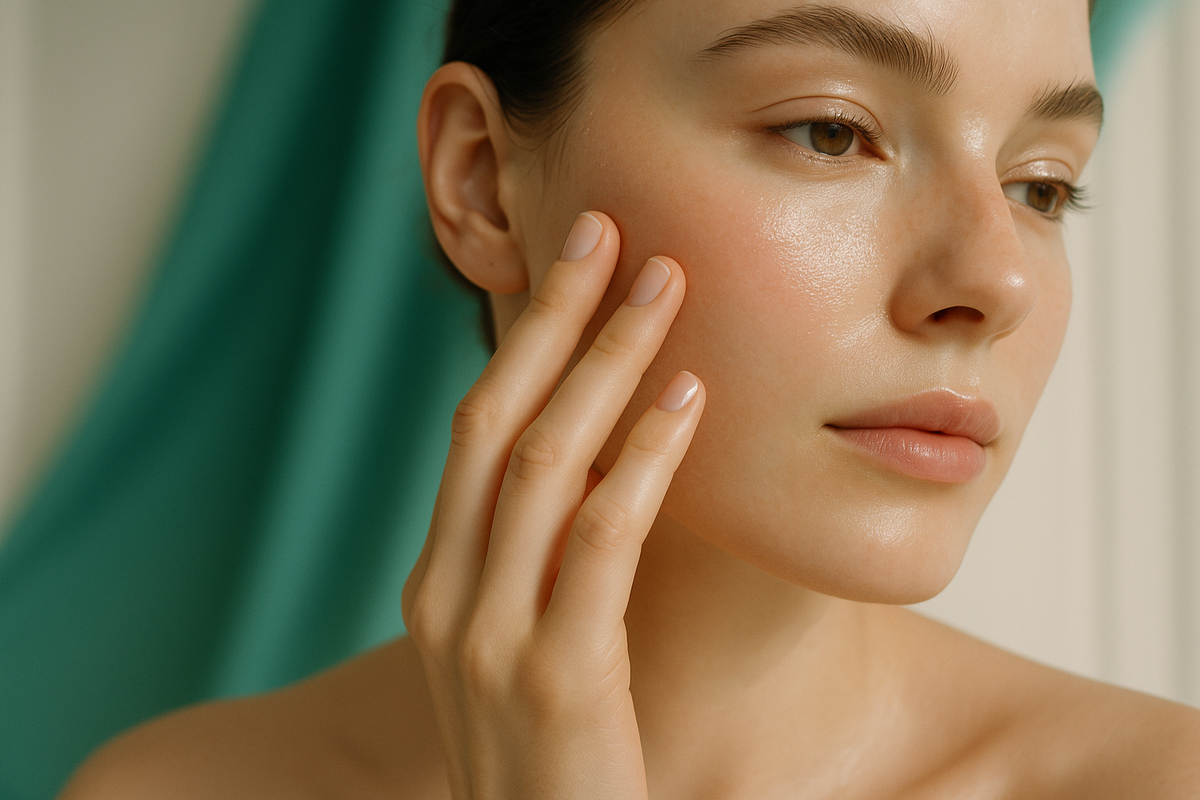
- Serum: Press a few drops of serum into your face and neck with your fingertips, using light pressing motions. The technique of pressing it in rather than rubbing helps the active ingredients penetrate the skin better.
- Moisturizer: Apply a moisturizer on top to layer the serum's effect and lock in moisture.
- Sunscreen (in the morning routine): In a daytime routine, sunscreen must always be used after the serum.
Morning or Evening?
Serums focused on hydration and brightening are suitable for both morning and evening use. Used in the morning, a serum gives the skin a feeling of vitality that lasts through the day; used in the evening, it accompanies the skin's overnight rest. Sensitive skin can start by adding a new serum to the evening routine first and observing how the skin responds.
If you would like to see the whole routine step by step, take a look at our article on the morning and evening skincare routine.
How Should You Choose the Right Serum?
When choosing a serum, your skin type and your priority should be the deciding factors. VORELL's serum collection includes two core options aimed at different needs:
| WATER GLOW SERUM | SHINE BOOST FACE & BODY SERUM | |
|---|---|---|
| Size / price | 30 ml, 999 TL | 50 ml, 1,140 TL |
| Focus | Everyday hydration support | Special occasion / evening glow |
| Key ingredients | Hyaluronic acid complex, ectoin, betaine, sodium PCA, panthenol, aloe vera, allantoin | Pearl extract, niacinamide, squalane, jojoba, ectoin, ceramide NP, centella, HA, panthenol, peptide |
| Main area of use | Face | Body (arms, legs, décolleté); can also be used on the face |
| Application note | Applied to dry skin; its effect drops on damp skin | Not recommended as an everyday serum; for special-occasion/evening prep |
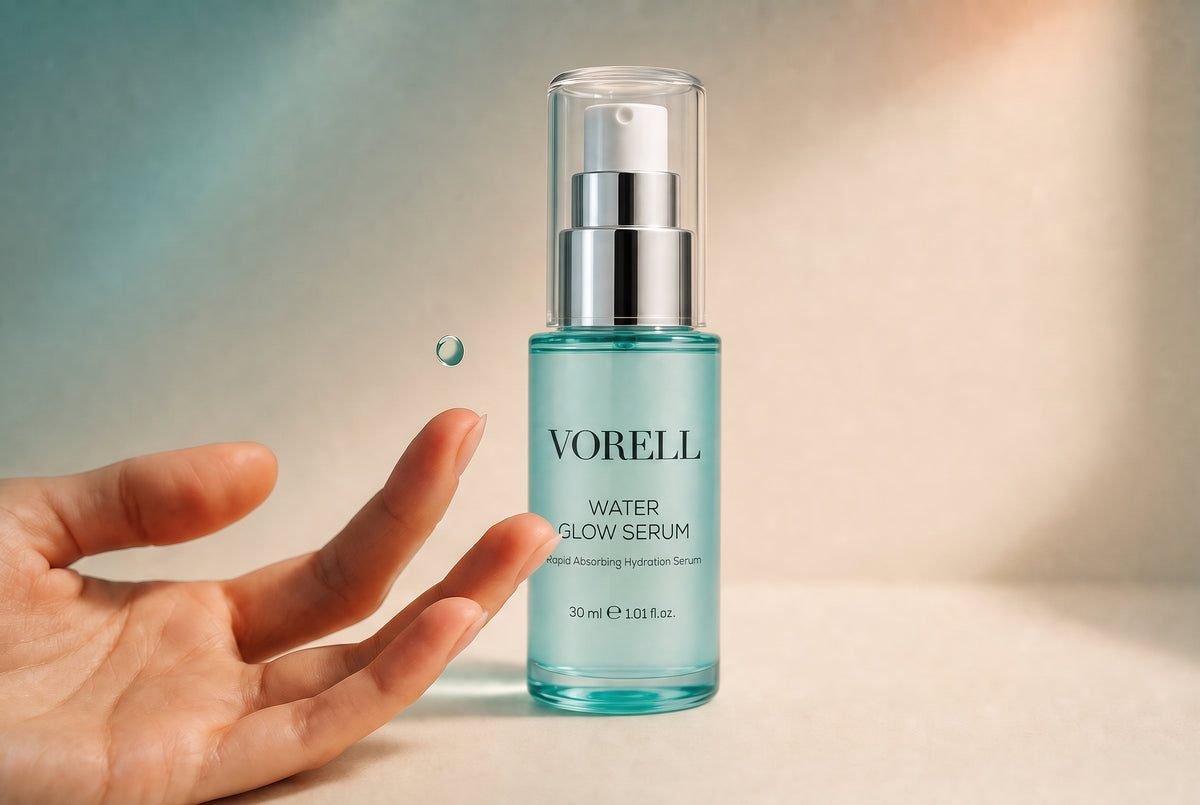
WATER GLOW SERUM delivers the "water glow" feel that is VORELL's signature — a glass-like hydration and luminosity from within — in a quickly absorbed texture. Two pumps are enough once the skin has dried after toner; it leaves no oily layer, only a velvety softness behind.
SHINE BOOST FACE & BODY SERUM, in turn, adds a visible layer of glow on top of that. While pearl extract spreads light evenly across the surface, ceramide NP, squalane, jojoba oil, and centella asiatica work to support the skin barrier. It is not vegan (pearl is mollusk-derived) and contains no synthetic glitter or mica — the glow comes entirely from the ingredients. These two serums do different jobs and do not replace one another.
If you are not sure which routine suits your skin better, you can measure your glow score and 7 metrics with the free AURA skin analysis and take that as your starting point.
Things to Watch Out for When Using a Serum
- Start with a small amount; a few drops are usually enough for the whole face.
- When adding a new serum to your routine, do not start it at the same time as other active products; observe how your skin responds to each one separately.
- Follow the application instructions: some serums are applied to slightly damp skin, while rich formulas that carry their own humectants (such as WATER GLOW SERUM) work better on skin that has dried.
- Results vary from person to person; regular, consistent use is more effective than a one-off application.
- If you are pregnant or breastfeeding, or you are on a prescribed skin treatment (a retinoid, for example), consult your doctor before adding a new active ingredient to your routine.
For more on how to layer a serum with other active ingredients such as vitamin C, retinol, or AHA/BHA, take a look at our article on whether active ingredients can be used together.
In Summary
Understood correctly and used in the right order, a serum becomes one of the strongest links in your skincare routine. Choosing a gentle, quickly absorbed formula suited to your skin type is the shortest path to that "glow like your aura" feeling.
Frequently Asked Questions
Can I use a serum without a cream?
Yes, but applying a moisturizer on top to lock in moisture, especially on dry skin, helps support the serum's effect. A serum can be used on its own, but together with a cream or moisturizer it makes for a more complete routine.
Can I use more than one serum at the same time?
You can, but it is advisable to layer from the lightest-textured serum to the richest. To observe how your skin responds, it is safer to add new products one at a time.
When will I notice a serum's effect?
Although it varies with the formula and how often you use it, with regular use a difference in how the skin feels and looks generally begins to show fairly soon. Consistent use, rather than a single application, determines the outcome.
Is a serum rinsed off?
No. Serums are leave-on products that stay on the skin without rinsing and have a moisturizer applied over them. The rinsing step applies only to cleansers.
Which skin type is a serum suitable for?
Hydration-focused serums (such as formulas containing hyaluronic acid, ectoin, and sodium PCA) suit almost every skin type — dry, combination, oily — because a lack of hydration can occur regardless of skin type. To work out which serum is right for you, you can first read our article on 7 effective ways to identify your skin type correctly.
Is a serum applied to damp skin or dry skin?
That depends on the serum's formula. Rich formulas that carry their own humectants, such as WATER GLOW SERUM, work better on dry skin, because their effect drops on damp skin. If you are using a different serum, following the application instructions on the product label is the safest course.