7 Effective Ways to Identify Your Skin Type Correctly
The most reliable way to identify your skin type is to leave a freshly cleansed face bare for 30-60 minutes without applying any product, then observe how the skin behaves in the T-zone and on the cheeks. Add the blotting paper test, tracking changes through the day and watching how skin reacts to products, and it becomes clear whether your skin type is oily, dry, combination or sensitive.
Short answer:
- Skin type (oily, dry, combination, sensitive) is genetic and permanent; a "skin condition" such as dehydration or sensitivity is temporary and should not be confused with type.
- The most reliable method is to leave a freshly cleansed face bare for 30-60 minutes without any product, then compare the T-zone with the cheeks (the bare-face test).
- The blotting paper test, observation through the day and tracking product reactions are complementary methods that confirm this result; VORELL's free AURA tool also provides an objective radiance score.
What Is the Difference Between Skin Type and Skin Condition?
Skin type is largely determined genetically and depends on the natural activity of the oil glands; it is examined in four main groups: oily, dry, combination and sensitive. This type shows a similar tendency throughout life and does not change fundamentally.
Skin condition, on the other hand, is a temporary state that shifts with external factors such as the season, stress, hormones, climate or the products used; dehydration, sensitivity or a dull appearance are examples. Oily skin can lose moisture in winter and feel oily and "dried out" at the same time — this does not mean the skin type has changed.
That is why, when identifying your skin type, you should look at a pattern that repeats over several days rather than the observation of a single day. The table below summarizes the basic signs of the four main types.
| Skin Type | Appearance on a Bare Face | Pore Appearance | Tendency During the Day |
|---|---|---|---|
| Oily | Overall shine, oiliness | Large, visible | Shine increases in the afternoon |
| Dry | Tightness, flaking, a matte feel | Fine, hard to notice | A feeling of tightness all day |
| Combination | Shiny T-zone, normal/dry cheeks | Visible in the T-zone | The difference between areas persists |
| Sensitive | Redness, tingling, stinging | Variable | Reacts more when products or surroundings change |
How Do You Do the Bare-Face Test and the Blotting Paper Test?
Wash your face with a gentle cleanser and pat it dry, then wait 30-60 minutes without applying any product. If there is shine across the face at the end of that wait, it points to oily skin; tightness and flaking point to dry skin; and if only the T-zone (forehead-nose-chin) shines while the cheeks stay normal, it points to a combination tendency.
To confirm this observation, press a sheet of blotting paper lightly onto the T-zone and then the cheeks. If the paper leaves an equally dense mark in every area it indicates oily skin, if it leaves no mark at all it indicates dry skin, and if it leaves a mark only in the central area it indicates combination skin. Using the two tests together gives a more reliable result than judging by eye alone.
What Do Changes During the Day and Pore Appearance Tell You?
Note how your skin looks in the morning, at midday and in the evening over several days. Oily skin tends to show more visible shine as the day goes on, while in dry skin the feeling of tightness tends to increase in the afternoon. This repeated observation reveals a more reliable pattern than a one-off test.
When you look closely in the mirror, large and visible pores are generally associated with oily or combination skin, while fine, hard-to-notice pores point to dry skin. Pore appearance is directly linked to how much oil is produced; it is not possible to shrink that appearance permanently, and regular purifying can only help make it temporarily less visible.
How Do You Track Elasticity and Seasonal-Hormonal Change?
Smile gently and see how your skin responds. In dry skin, fine lines and a feeling of tightness may be more pronounced, while oily and combination skin generally looks more elastic and plumper. This simple observation is a quick way to understand your skin's moisture level.
Does your skin get dry in winter and oily in summer? Do you see clear differences during your menstrual cycle, pregnancy or stressful periods? Noting these changes helps you distinguish your "dominant" skin type; most people's skin shifts slightly with the season, but the underlying tendency generally stays the same. If hormonal skin changes are pronounced and uncomfortable, it is worth consulting a dermatologist.
How Do You Track Product Reactions and Measure With AURA?
If redness, stinging or itching appears after you try a new product, this is an important sign of a tendency towards sensitive skin. Trying a new product first on a small area such as under the jaw and observing it for 24-48 hours lets you notice possible reactions early. If the reaction is severe or does not pass, consulting a dermatologist is recommended.
If you want to compare the observations above against a more objective reference rather than judging by eye, VORELL's free AURA tool produces a radiance score and seven metrics from two photos. The photos are not stored and the tool is not a medical diagnostic method; it offers a complementary perspective on the process of identifying your skin type.
Which VORELL Step Is Right for Your Skin Type?
Once you have clarified your skin type, the next step is choosing products that genuinely suit it. The table below matches the result of the tests above with VORELL's gentle, alcohol-free formulation principles.
| Skin Type | Key Need | Recommended Step |
|---|---|---|
| Oily / combination (if pores are visible) | Purifying, moisture balance | Water Glow Tonic — AHA+BHA, no rinsing, after the cleansing step |
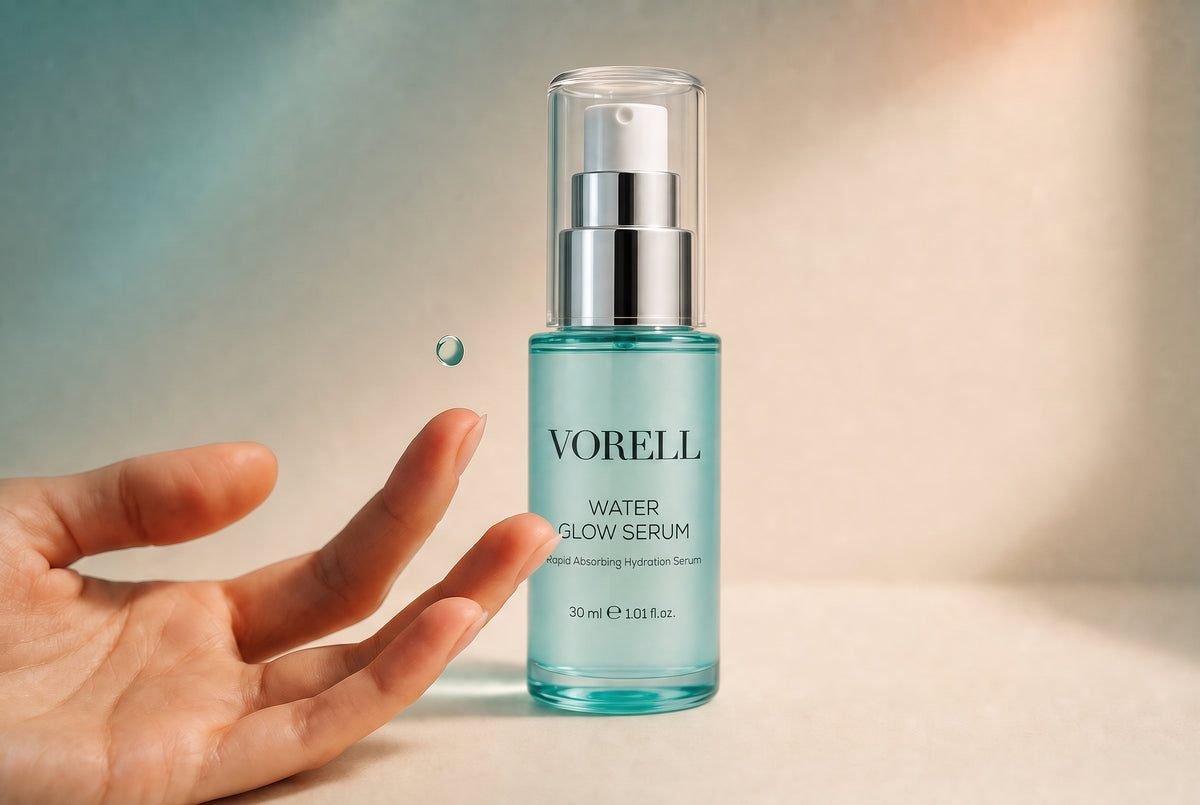
| Dry | Intense, fast-absorbing hydration | Water Glow Serum — HA complex, ectoin, sodium PCA |
| Sensitive | Alcohol-free, gentle hydration | Start with Water Glow Serum; add acid-containing steps gradually |
| All types (weekly support) | Soothing, revitalizing | Water Glow Bubble Mask — no rinsing, makeup can be applied on top |
For combination skin, a targeted approach generally works best: the toner can be used more often in the T-zone and less often on the cheeks. With sensitive skin, the right approach is to observe how the skin reacts on a small area before moving to a toner that contains acids, and to reduce the frequency if needed. For the place of a toner in a routine, see our article on whether a facial toner is really necessary, and for serums, see what a serum is and how to use it. How many times a week to add the Bubble Mask to your routine is covered in how often should you use a face mask. And to avoid the mistakes people often make at the moisturizing step, the 10 biggest mistakes when choosing a moisturizer is a useful guide as well.
Frequently Asked Questions
Can my skin type change over time?
Yes, skin type can shift slightly over time. Age, hormonal changes, climate and lifestyle can affect how your skin behaves; that is why it is useful to observe your skin type again a few times a year.
Is a single product enough for combination skin?
Usually not. With combination skin, the needs of different areas differ; combining a hydration-focused serum with an alcohol-free toner may help keep both the T-zone and the cheeks in balance. It is also possible to use the toner more often in the T-zone and less often on the cheeks.
Which test should I trust for my sensitive skin?
For sensitive skin, the most reliable indicator is the product reaction test. Rather than applying a new product directly to the face, apply it first to a small area such as under the jaw and watch it for 24-48 hours; if redness or stinging persists or is severe, seeing a dermatologist is recommended.
When and how should I do the bare-face test?
The test gives a more reliable result if you do it on a calm day, when your skin has not been strongly affected by a new product or by the sun for the past 2-3 days. After washing your face with a gentle cleanser and patting it dry, apply no product for 30-60 minutes; at the end of that time, examine the T-zone and the cheeks one by one.
Does AURA also tell me my skin type?
AURA is a free tool that produces a radiance score and seven metrics from two photos; it does not diagnose skin type directly, but it does offer an objective reference for the overall appearance of your skin. Your photos are not stored and the tool does not replace a medical diagnostic method.